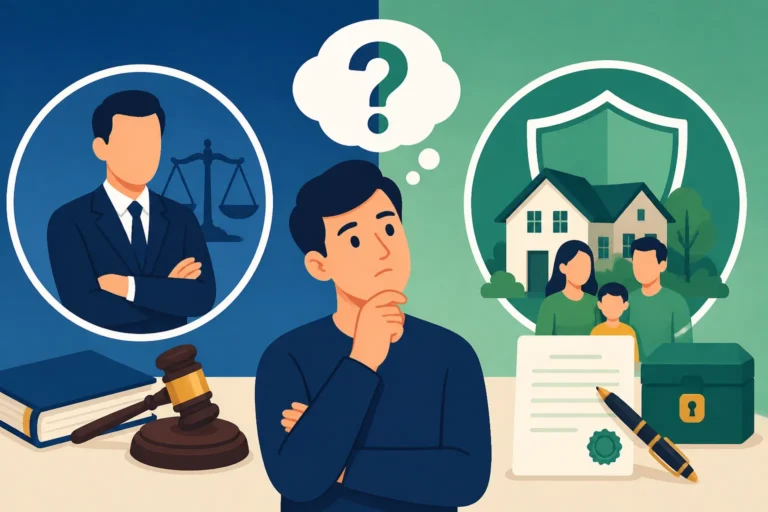
What Happens If You Die Without a Will?
It's a fear many of us quietly hold: what happens to our loved ones and everything we've worked for if we're suddenly gone without a plan? The truth is, if you die without a valid will, you leave a legal void that the state, not your family, will step in to fill. This guide will meticulously walk you through the often complicated and emotionally taxing journey that your estate and your family will face, demystifying the process and highlighting why planning ahead is so crucial.
Understanding What It Means to Die Intestate
The term "intestate" might sound formal and a bit daunting, but it simply means dying without a legally recognized and valid will. When this happens, you haven't explicitly stated who you want to inherit your property, who should care for your minor children, or who should manage your estate. It's not just about wealthy individuals; it applies to anyone, regardless of the size or complexity of their assets. It's a common misconception that if you don't have a vast fortune, you don't need a will. In reality, everyone has an estate, even if it's just a bank account, a car, or personal belongings, and without a will, the state decides its fate.
The Legal Framework: Intestate Succession Laws
When there's no will, state laws on intestate succession kick in, becoming your default "estate plan." These laws are rigid, designed to provide a framework for property distribution based on familial relationships, not necessarily on what you might have personally desired. Each state has its own specific statutes governing this process, outlining a hierarchy of who inherits what. For instance, in many states, if you're married with no children, your spouse might inherit everything. But if you have children, the spouse and children might split the estate according to fixed percentages. This can lead to unintended consequences, like a spouse having to sell the family home to pay out a child's share, even if that child is an adult and financially stable.
Consider a scenario in Ohio, where if you have a spouse and children, your spouse would typically inherit the first $20,000 to $60,000 (depending on if the children are also the spouse's children), and then half of the remaining estate, with the children inheriting the rest. This isn't necessarily what most people would want, especially if their children are minors or if the surviving spouse needs full access to assets for living expenses. These laws also dictate how to handle situations where a beneficiary has passed away or if there are no direct heirs. The court system, often through a lengthy and public process known as probate, will strictly adhere to these rules, leaving little room for individual preferences or special circumstances. Understanding What Is Probate? Complete Guide can illuminate just how involved this process can become.
Assets That Fall Under Intestacy Rules
It's important to realize that not all your assets will automatically go through intestate succession. Only assets held solely in your name without a designated beneficiary or a joint owner will be subject to these state laws. This is often referred to as your "probate estate." These are the assets that require a court-appointed administrator to legally transfer ownership.
For example, a checking account held solely in your name, a car titled only to you, or real estate owned individually would likely go through the intestacy process. However, many common assets are designed to bypass this system entirely. Life insurance policies, retirement accounts like 401(k)s and IRAs, and Payable-on-Death (POD) or Transfer-on-Death (TOD) accounts typically have named beneficiaries. These assets are distributed directly to those individuals, regardless of whether you have a will or die intestate. Similarly, property held in joint tenancy with rights of survivorship, or assets placed into a living trust, would also avoid the intestate succession rules. For those wondering about the full scope, exploring What Assets Are Included in Your Estate? can provide a clearer picture of what the courts might actually control.
How Your Assets Are Distributed Without Your Direction
One of the most jarring realities of dying without a will is losing control over who gets what. Instead of your wishes, a predetermined legal hierarchy decides. This can lead to very different outcomes than what you might have intended, potentially creating financial hardship or even outright family strife. It’s a situation that often adds stress to an already grieving family.
Who Inherits What According to State Law
The specific order of inheritance varies from state to state, but generally follows a similar pattern. Let’s break down the common scenarios:
- If you have a surviving spouse but no children: In many states, your spouse will inherit your entire probate estate. This sounds straightforward, but imagine if you wanted a portion to go to a beloved niece, or a specific heirloom to a dear friend. Without a will, those wishes are simply ignored.
- If you have a surviving spouse and children: This is where things can get complicated. Often, the spouse receives a portion (sometimes half, sometimes a certain dollar amount plus a share of the remainder), and the children divide the rest. If you have children from a previous marriage, the distribution can become even more complex and contentious, as the law might not distinguish between them the way you would have. For instance, in Washington state, if you have a spouse and descendants, the spouse takes all community property and half of separate property, while descendants take the other half of separate property. This split can force the sale of assets to divide them, which is rarely an ideal outcome for the surviving spouse.
- If you have no spouse but have children: Your children will typically inherit your entire estate, divided equally among them. If one of your children has passed away but has their own children (your grandchildren), those grandchildren might inherit their parent's share, depending on the state's per stirpes or per capita rules.
- If you have no spouse or children: The assets usually pass up the family tree – first to your parents, then to your siblings (or their children if they've passed), then to grandparents, aunts, uncles, and so on. If no living relatives can be found, your estate could eventually "escheat" to the state, meaning the state takes ownership of your assets. This is a truly unfortunate outcome, as your hard-earned wealth ends up in state coffers instead of benefiting anyone you knew or loved.
The critical takeaway here is that these rules are generic. They don't account for unique family dynamics, a child with special needs, or a beloved stepchild who you consider your own but isn't legally recognized under intestacy laws. This is precisely why individuals often seek guidance on Do I Need a Will? or even consider a Revocable Living Trust Explained to ensure their specific intentions are honored.
The Probate Process Without a Will
When someone dies intestate, their probate estate must go through the legal process of probate. This is a court-supervised procedure that ensures debts are paid and remaining assets are distributed according to state law. The probate court will appoint an administrator (often a family member, but sometimes a professional if no one steps forward or there's disagreement) to manage the estate. This administrator has many of the same responsibilities as an executor named in a will, including inventorying assets, paying creditors, and distributing inheritances. However, without a will, the administrator has no explicit instructions from you, forcing them to rely solely on statutory guidelines.
This process can be lengthy, often taking many months or even years, especially for larger or more complex estates, or if family disputes arise. During this time, assets are typically frozen, meaning your loved ones may not have immediate access to funds they might desperately need for living expenses or funeral costs. Furthermore, probate is a public process, meaning details of your assets, debts, and who inherits them become a matter of public record. For many families, this lack of privacy adds to the already heavy burden of grief. The court fees, attorney fees, and administrator fees associated with probate can also significantly diminish the estate's value, leaving less for your heirs. Delving into How Long Does Probate Take? and How Much Does Probate Cost? can provide a sobering look at these practical realities.
The Real-World Consequences for Your Family
Beyond the legal complexities, dying without a will unleashes a torrent of emotional and financial difficulties for those you leave behind. It’s not just about money; it’s about peace of mind, clarity, and protecting your family from unnecessary distress during an already vulnerable time.
Financial Headaches and Unforeseen Expenses
The absence of a will can create immediate and significant financial strain. Funeral expenses and other immediate costs might fall on family members without easy access to the deceased's funds. As mentioned, the probate process itself can be costly, with legal fees, court costs, and administrative expenses eating away at the inheritance. These costs, along with potential estate taxes (if your estate exceeds federal or state exemption thresholds), can reduce the overall value of what your heirs receive. In states like New York, for example, the New York Estate Tax Cliff Explained can lead to a substantial tax bill on estates that just barely exceed the exemption amount.
Moreover, if there’s no clear direction, certain assets might need to be liquidated to satisfy legal requirements or to distribute shares equally among heirs. Imagine if your family home, a place of cherished memories, has to be sold because state law dictates a split among several adult children, and no one can afford to buy out the others. This is a heartbreaking, yet common, scenario. Your family might also face delays in accessing funds, leading to missed mortgage payments, accumulating bills, or an inability to cover daily living expenses, especially if the deceased was the primary breadwinner. An Executor Checklist: What to Do When Someone Dies often assumes a will is in place; without one, many steps become far more arduous.
Emotional Toll and Potential for Family Disputes
Grief is already an overwhelming emotion. Adding the stress of legal battles, financial uncertainty, and contentious family discussions can be truly devastating. Without clear instructions from you, family members are left to guess your intentions, which inevitably leads to disagreements. Who gets your grandmother's antique watch? Who inherits the vacation cabin you loved so much? These items, often imbued with sentimental value, can become battlegrounds, tearing families apart. Siblings might argue over who should be appointed administrator or how assets should be divided, leading to long-lasting resentments.
The probate court, bound by strict laws, cannot consider personal feelings or prior promises. Your verbal assurances to a family member about a specific inheritance hold no legal weight. The emotional toll of this uncertainty, coupled with the frustration of navigating a complex legal system, can prolong the grieving process and leave lasting scars on family relationships. This is precisely the kind of avoidable heartache that proper estate planning aims to prevent, ensuring your legacy is one of care and foresight, not confusion and conflict.
Guardianship for Minor Children
Perhaps one of the most critical and often overlooked consequences of dying without a will, especially for parents, is the issue of guardianship for minor children. If both parents pass away without naming guardians in a will, the decision falls entirely to the probate court. The court will appoint someone it deems to be in the "best interest of the child," but this might not be the person you would have chosen.
Imagine your children being placed with a relative you barely speak to, or even worse, someone completely outside your family circle, simply because the court found them suitable and no other named guardian existed. This can be an incredibly traumatic experience for children already reeling from the loss of their parents. A will allows you to clearly designate who you want to raise your children, ensuring they are cared for by someone you trust and whose values align with your own. It’s a profound act of love and protection, sparing your children from an already difficult situation becoming even more uncertain. This concern alone is a compelling reason for many to create a will, addressing questions like Do I Need a Will? with a resounding yes.
Taking Control: Why a Will (or Trust) Is Essential
The thought of facing these consequences can be overwhelming, but the good news is that they are entirely preventable. Taking the time to create a proper estate plan, even a simple one, empowers you to direct your legacy and protect your loved ones. It’s an act of responsibility and love that provides clarity and peace of mind when it’s needed most.
The Power of a Simple Will
A will is more than just a legal document; it's your voice after you're gone. It allows you to designate an executor who will manage your estate, ensuring your wishes are carried out efficiently and ethically. More importantly, it clearly states who should inherit your assets, from your home to your sentimental heirlooms. You can name specific beneficiaries for specific items, preventing future family disputes. For parents of minor children, a will is indispensable, as it allows you to nominate legal guardians, ensuring your children are raised by someone you trust and love, in an environment you approve of. Without it, the court decides, which could lead to outcomes far from your desires.
Think of the relief your family will feel knowing exactly what your intentions were. There’s no guessing, no arguments over who gets what, and no fear of the state making decisions on your behalf. There are many accessible options today, from working with an estate planning attorney to using online services like LegalZoom, which can guide you through the process of creating a basic, legally sound will. Many find that Online Wills vs Attorney: Which Is Better? helps them decide on the right approach.
Beyond the Will: Considering a Trust
While a will is a foundational component of any estate plan, a trust can offer even more robust benefits, especially for those with larger estates, complex family dynamics, or a desire for greater privacy and control. A living trust, for instance, allows you to transfer assets into the trust during your lifetime, managing them as the trustee. Upon your passing, a successor trustee you've named distributes the assets to your beneficiaries according to your instructions, all without going through probate. This can save your heirs considerable time, expense, and stress. It also keeps your estate affairs private, unlike the public record of probate.
Trusts can also offer more nuanced control over how and when beneficiaries receive assets. You can set up provisions for minor children to receive their inheritance at a certain age, or for funds to be used for specific purposes, such as education. They can be particularly useful for protecting assets for beneficiaries with special needs or for managing real estate in multiple states. For a comprehensive overview, understanding Will vs Trust: Which Do You Need? is a great next step. Whether it’s a will or a trust, the goal remains the same: to ensure your legacy is one of clarity and care, not confusion and conflict, providing true peace of mind for both you and your loved ones. Ultimately, creating an Estate Planning Checklist is a proactive step toward securing your family's future.
Disclaimer
The information provided in this article is for general informational purposes only and does not constitute legal, financial, or tax advice. Estate laws are complex and vary by state and individual circumstances. It is highly recommended to consult with a qualified estate planning attorney or financial advisor to discuss your specific situation and create an estate plan tailored to your needs.