Can a Trust Avoid Probate?
The thought of your loved ones navigating a complex and often public legal process after you're gone is a legitimate worry for many. Probate, with its court appearances, paperwork, and potential for delays, can add immense stress during an already difficult time. This comprehensive guide will explain how establishing a trust can be a highly effective way to bypass probate, offering a smoother, more private transition for your assets to your beneficiaries.
Understanding Probate and Its Pitfalls
Before we dive into how trusts help, it's essential to grasp what probate actually entails and why so many people actively seek to avoid it. It's not just a legal term; it's a real-world process that affects families directly.
What Probate Really Means for Your Family
Imagine this scenario: you've just lost a parent, and while you're grieving, you're also trying to figure out how to manage their estate. If they had a will, but no trust or other probate-avoidance strategies, their assets are likely headed for probate court. This isn't a quick stop; it's a formal legal proceeding where a court validates the will, identifies and inventories the deceased person's property, appraises the property, pays debts and taxes, and then distributes the remaining assets as the will directs.
The process often begins with filing a petition with the probate court, often in the county where the deceased resided. For example, in California, this typically happens in the Superior Court. The executor named in the will then needs to notify all heirs and beneficiaries, creditors, and sometimes the public. There are strict timelines for these notifications, and missing them can cause significant delays. Think about all the documentation required: bank statements, investment account details, property deeds, car titles, and even personal belongings. It's a meticulous, time-consuming effort that can feel overwhelming when you're already dealing with loss. For a deeper dive, check out our guide on what goes through probate: "What Assets Go Through Probate?".
Why People Want to Avoid Probate
The reasons people want to avoid probate are very real and deeply personal. First and foremost, there's the time factor. Probate can stretch on for months, or even years, especially if the estate is complex, there are disputes among heirs, or the court calendar is backed up. Imagine waiting 18 months or more to fully settle an estate in a busy county like Los Angeles, or even longer if there's a challenge to the will. This delay can prevent beneficiaries from accessing funds they might need, like for immediate living expenses or to maintain inherited property.
Then there's the cost. Probate isn't free. There are court fees, attorney fees, executor fees, appraisal fees, and sometimes even accounting fees. These costs can quickly add up, eating into the inheritance your loved ones will ultimately receive. In some states, like California, attorney and executor fees are set by statute as a percentage of the estate's gross value, meaning even a simple estate can incur substantial costs. For example, on a $1 million estate in California, statutory fees for both the executor and attorney could easily exceed $26,000 each, not counting other administrative expenses. This is money that could have gone directly to your family. You can learn more about these expenses in our article, "How Much Does Probate Cost?".
Finally, and perhaps most frustrating for many, is the lack of privacy. Probate is a public process. Once a will is filed with the court, it becomes a matter of public record. Anyone can access the details of your estate, including what assets you owned, who inherited them, and how much they received. For families who value their financial privacy, this public exposure can be a significant concern. It lays bare personal financial details that many would prefer to keep confidential.
How a Trust Bypasses Probate
The good news is that there's a widely used and effective tool to circumvent these probate woes: the trust. Specifically, a revocable living trust is the go-to strategy for avoiding probate on assets held within it.
The Mechanics of a Revocable Living Trust
A revocable living trust is essentially a legal arrangement where you (the "grantor" or "settlor") create a separate entity – the trust – to hold your assets. You then name a "trustee" to manage these assets according to the instructions you've laid out in the trust document. Crucially, while you're alive and competent, you can be both the grantor and the initial trustee, giving you complete control over your assets. You can add or remove assets, change beneficiaries, or even revoke the entire trust at any time, hence the term "revocable" and "living."
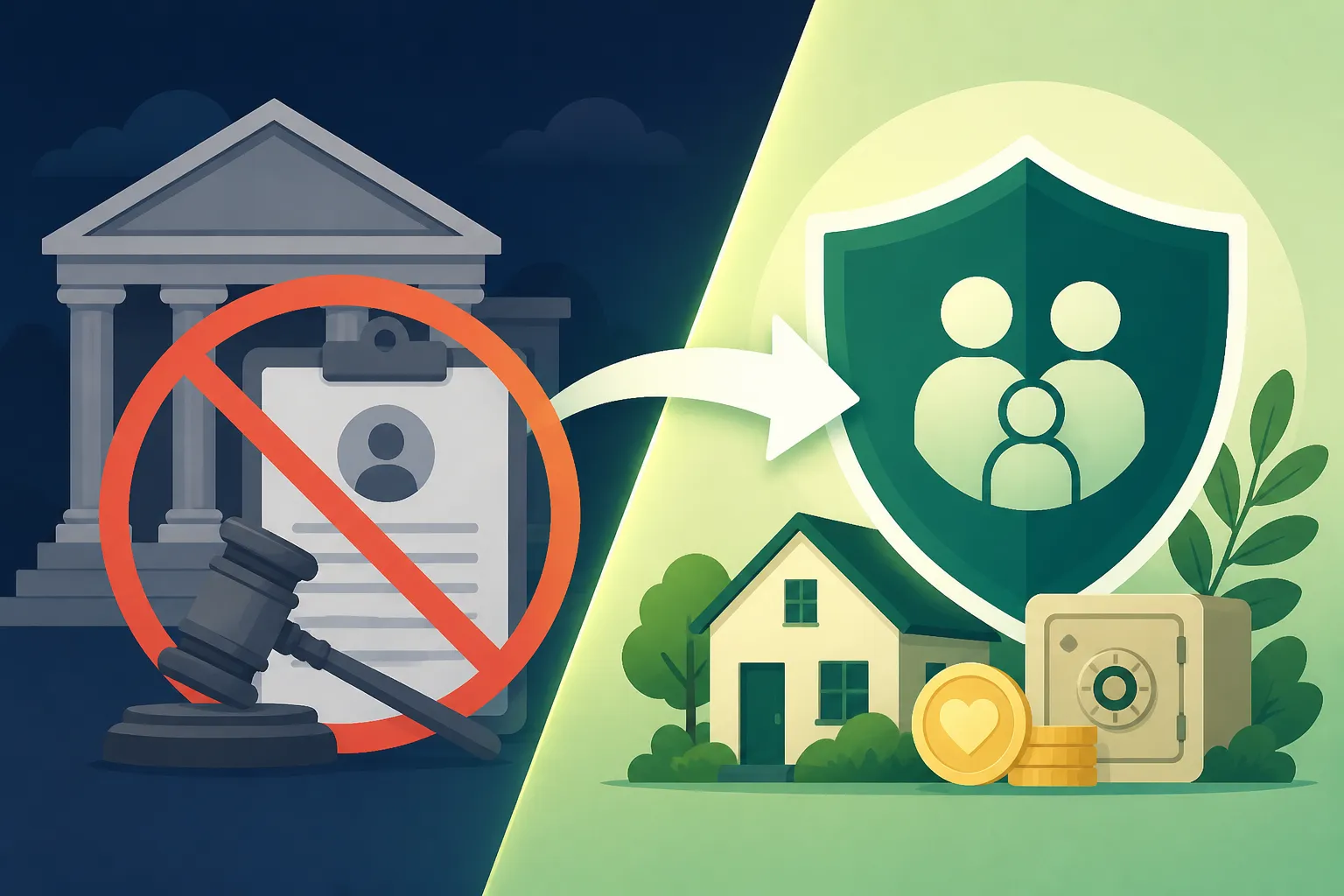
The magic happens upon your death (or incapacitation). Because your assets are technically owned by the trust, and not by you personally, they don't fall into your probate estate. Instead, your chosen "successor trustee" steps in, following your instructions to distribute or manage the assets for your beneficiaries without any court involvement. It's a private process that occurs outside the public and costly probate system. This is a fundamental difference compared to simply having a will, which typically needs to go through probate to be enacted. Our article, "Revocable Living Trust Explained," dives deeper into this topic.
Assets That Benefit Most from Being in a Trust
Not all assets are created equal when it comes to trusts and probate. Certain types of property particularly benefit from being held in a trust to ensure they bypass the probate process smoothly.
- Real Estate: This is perhaps the most common reason people establish trusts. Any real property, whether it's your primary residence, a vacation home, or rental properties, will generally go through probate if it's solely in your name at the time of your death. Placing real estate into a trust avoids this. For instance, if you own a family home in San Diego, transferring the deed into your revocable living trust means your successor trustee can transfer ownership directly to your heirs without involving the probate court. This is especially beneficial if you own property in multiple states, as it can help you avoid multiple, costly probate proceedings.
- Bank Accounts and Investment Accounts: While many of these accounts allow for "Payable on Death (POD)" or "Transfer on Death (TOD)" designations, putting them into a trust adds an extra layer of organization and ensures all your financial assets are managed under one comprehensive plan. If you have several brokerage accounts with different beneficiaries, consolidating them within a trust simplifies administration for your successor trustee.
- Valuable Personal Property: High-value items like extensive art collections, antiques, or luxury vehicles can also be placed into a trust. This ensures their distribution follows your wishes without needing individual appraisal or court oversight during probate.
It’s important to remember that for the trust to actually work its probate-avoidance magic, you have to fund it. That means formally transferring ownership of your assets from your individual name into the name of the trust. Just setting up the trust document isn't enough; the assets must be retitled. We'll talk more about this crucial step shortly.
The Role of a Successor Trustee
The successor trustee is arguably the most critical person in your trust plan, other than yourself. This is the individual or entity you designate to take over the management and distribution of your trust assets once you are no longer able to do so, either due to incapacitation or death. Think of them as the executor of your trust, but with far less court oversight.
Their responsibilities are significant. When you pass away, the successor trustee's first job is to step in and identify all trust assets. They then need to inform beneficiaries, pay any outstanding debts or taxes from the trust assets (if instructed), and finally distribute the assets according to your precise instructions in the trust document. This could mean distributing everything outright, or managing assets for younger beneficiaries until they reach a certain age. Unlike an executor in a probate case, a successor trustee typically operates privately, without continuous court supervision, which contributes significantly to the efficiency and privacy benefits of a trust. Choosing someone trustworthy, organized, and capable is paramount. This could be a trusted family member, a close friend, or a professional trustee service.
Key Considerations Before Setting Up a Trust
While trusts offer compelling advantages, they aren't a one-size-fits-all solution, and there are important factors to consider before deciding if one is right for you.
Choosing the Right Type of Trust for Your Needs
The world of trusts can seem daunting because there are many different types, each designed for specific purposes. For avoiding probate, a revocable living trust is almost always the answer. However, it's worth understanding that other trusts exist for different goals.
For instance, an irrevocable trust can offer stronger asset protection from creditors and potential estate tax benefits, but at the cost of giving up control over the assets once they are placed in the trust. You can't change your mind easily, or at all, with an irrevocable trust. Then there are specialized trusts like a "Special Needs Trust Explained" to provide for a disabled loved one without jeopardizing their government benefits, or a "Charitable Remainder Trust Explained" for philanthropic goals. The key is aligning the trust's purpose with your specific estate planning objectives. If your primary goal is to avoid probate, maintain flexibility, and keep control over your assets during your lifetime, a revocable living trust is likely your best bet.
The Cost and Complexity of Trust Administration
While a trust can save your beneficiaries a lot of money and hassle by avoiding probate, it's important to be realistic about the upfront costs and ongoing complexities. Drafting a comprehensive revocable living trust involves more legal work than drafting a simple will. This means the initial legal fees will typically be higher. Expect to pay anywhere from a few hundred dollars for a basic online service to several thousand dollars for a customized trust drafted by an experienced estate planning attorney, depending on the complexity of your estate and your location. However, this upfront investment is often dwarfed by the potential savings in probate costs for larger estates.
Moreover, a trust isn't a "set it and forget it" tool. It requires ongoing maintenance. If you acquire new significant assets, you'll need to remember to transfer them into the trust. You should also review your trust document periodically – perhaps every few years, or after major life events like a marriage, divorce, birth, or death – to ensure it still reflects your wishes and current laws. The "Trust & Will vs LegalZoom for Estate Planning" discussion highlights some of the options available for creating and maintaining these documents. While services like LegalZoom can provide accessible options for simpler situations, complex estates or those with unique family dynamics often benefit from personalized legal advice.
Don't Forget the "Pour-Over" Will
Even with a fully funded revocable living trust, you absolutely still need a will, specifically a "pour-over" will. Why? Because it's easy to forget to transfer every single asset into your trust, or you might acquire new assets shortly before your death that never make it into the trust. For example, if you win the lottery (a nice thought!) and pass away before you can retitle the winnings into your trust, those assets would normally go through probate.
A pour-over will acts as a safety net. It states that any assets you own at the time of your death that were not already transferred into your trust should be "poured over" into it. This ensures that eventually, all your assets are managed and distributed according to the terms of your trust, even if some technically pass through a mini-probate process first. While the goal is to avoid probate entirely through proper trust funding, the pour-over will catches any stragglers, ensuring your overall estate plan remains cohesive. Learn more about the intricacies of this safety net in "Pour-Over Will Explained".
Practical Steps to Implement a Trust
Thinking about a trust is one thing, but actually putting one into action requires specific steps. It’s not just about signing a document; it’s about making sure your assets are correctly linked to the trust.
Funding Your Trust: The Critical Step
This cannot be emphasized enough: a trust only works to avoid probate for assets that are legally transferred into it. This process is called "funding the trust," and it's where many people fall short. You can have the most beautifully crafted trust document, but if your assets aren't titled in the trust's name, they'll still likely go through probate.
Here’s a breakdown of what funding typically involves:
- Real Estate: You'll need to prepare and record new deeds that transfer ownership of your property from your individual name (or joint names) to the name of your trust. For example, if you own a house, the deed would change from "John Doe" to "John Doe, Trustee of The John Doe Revocable Living Trust dated [date]."
- Bank and Brokerage Accounts: You'll need to contact your bank and financial institutions to retitle these accounts into the name of your trust. Some institutions might have their own forms or procedures for this.
- Stock Certificates/Mutual Funds: For physical certificates, you might need to endorse them over to the trust or work with a transfer agent. For electronically held investments, your brokerage will guide you on the necessary paperwork.
- Other Assets: For items like vehicles, you might need to update the title with your state's Department of Motor Vehicles. Collectibles, valuable artwork, or even business interests may require specific assignments or transfers.
It’s crucial to be meticulous during the funding process. This is the difference between a trust that works seamlessly and one that leaves your loved ones dealing with probate anyway. Our dedicated article, "How to Fund a Living Trust," provides a detailed walkthrough of this process.
Professional Guidance vs. DIY Solutions
When it comes to setting up a trust, you generally have two main paths: working with an experienced estate planning attorney or using a do-it-yourself (DIY) service. Each has its pros and cons.
An experienced estate planning attorney will provide personalized advice tailored to your specific financial situation, family dynamics, and state laws. They can help you navigate complex scenarios, such as blended families, special needs beneficiaries, or significant business interests. They'll also ensure your trust is properly funded and integrated with your overall estate plan, including your pour-over will, powers of attorney, and healthcare directives. While this is generally the more expensive option upfront, the peace of mind and assurance that your plan is legally sound and effective can be priceless.
DIY platforms, such as LegalZoom, offer a more affordable entry point for estate planning documents. They can be a reasonable option for individuals or couples with straightforward financial situations and uncomplicated family structures. These services guide you through a series of questions to generate basic trust documents. However, they typically don't provide personalized legal advice, cannot assist with the complex task of funding your trust, and may not catch nuances unique to your situation or specific state laws. If you choose this route, you'll be largely responsible for understanding the legal implications and ensuring everything is correctly executed and funded. It's a trade-off between cost and comprehensive, personalized expertise.
Here's a quick comparison to help you weigh your options:
| Feature | Revocable Living Trust (Attorney-Drafted) | Revocable Living Trust (DIY Service like LegalZoom) |
|---|---|---|
| Personalized Advice | High | Low / None |
| Cost | Higher (typically $1,500 – $5,000+) | Lower (typically $300 – $1,000) |
| Complexity Handled | High (complex estates, unique family situations) | Low (simple estates, straightforward wishes) |
| Funding Assistance | Often provided or guided | Generally self-service |
| Legal Review | Comprehensive by an attorney | Automated, based on your inputs |
| Ongoing Maintenance | Attorney can advise on updates | Requires proactive self-management |
| State Law Expertise | Tailored to specific state nuances | General templates; may require user vigilance |
| Peace of Mind | Generally higher due to expert involvement | Varies based on user's understanding and execution |
Ultimately, the best approach depends on your individual circumstances. For many, the investment in an attorney-drafted trust is well worth it to ensure everything is handled correctly and to avoid potential costly mistakes down the line.
Can a Trust Avoid Probate? Absolutely.
The answer to whether a trust can avoid probate is a resounding yes. A properly established and fully funded revocable living trust is one of the most effective tools available for transferring assets to your beneficiaries without the delays, costs, and public nature of the probate court system. It offers flexibility during your lifetime, privacy after your passing, and a smoother transition for your loved ones. However, it's not a magic bullet; it requires careful planning, accurate funding, and periodic review to ensure it continues to meet your goals and reflects your current situation. Taking the time to set up your trust correctly is a gift you give to your family, allowing them to focus on grieving and healing rather than grappling with legal complexities.
Disclaimer
This article is for general informational purposes only and does not constitute professional advice. Laws and regulations vary by location and change over time. Consult a qualified professional for guidance on your specific situation.