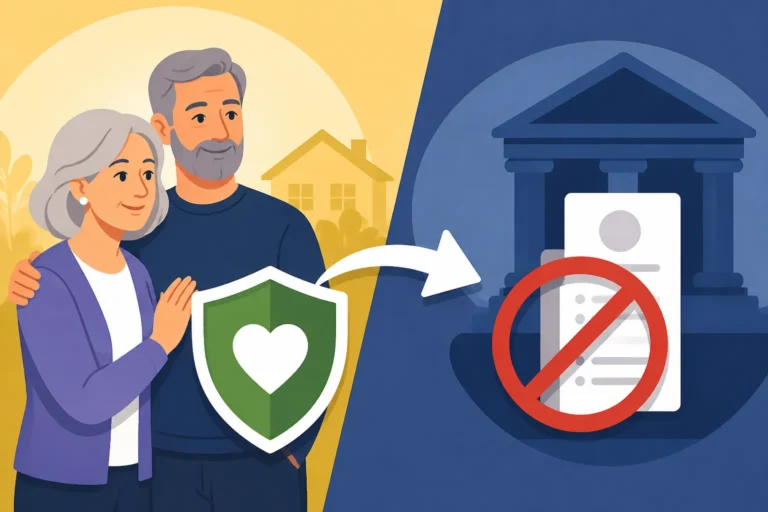
Do Unmarried Partner Pay Inheritance Tax in Pennsylvania?
It’s a heart-wrenching reality: you’ve spent years building a life with your beloved partner, sharing everything, only to face a complicated, often unfair, financial maze when they pass away. For unmarried partners in Pennsylvania, this isn't just about grief; it often means grappling with a significant and unexpected tax bill. This comprehensive guide will walk you through the specifics of Pennsylvania’s inheritance tax and, crucially, address whether unmarried partners are liable for this tax, outlining strategies to help navigate this complex landscape.
Understanding Pennsylvania's Inheritance Tax Landscape
Pennsylvania is one of only a handful of states that still imposes an inheritance tax, a tax levied directly on the beneficiaries who receive assets from a deceased person's estate. This is a crucial distinction from an estate tax, which is paid by the estate itself before assets are distributed. The difference can feel like splitting hairs, but it has significant implications for how much money actually ends up in your pocket. Knowing the ins and outs of Inheritance Tax vs Estate Tax: Who Pays? is vital for anyone dealing with an estate.
What is the Pennsylvania Inheritance Tax?
Unlike the federal government, which doesn't have an inheritance tax, Pennsylvania collects tax on the value of assets transferred from a deceased resident's estate to their beneficiaries. This includes things like real estate, bank accounts, investments, and even tangible personal property. The tax rate isn't a flat percentage; it varies significantly depending on your relationship to the deceased. This is where unmarried partners often run into trouble.
When we talk about the Pennsylvania inheritance tax, we’re talking about a system designed with traditional family structures in mind. If you're a spouse or a direct lineal heir (like a child or grandchild), the tax burden is either non-existent or significantly lower. However, if your relationship doesn't fit neatly into these categories, the state views your inheritance differently, and often, more expensively. For a deeper dive into the state's rules, you can read our guide on the Pennsylvania Inheritance Tax Explained 2026.
Who Pays and What Are the Rates?
The responsibility for paying the inheritance tax generally falls on the beneficiary, although the executor of the estate is usually responsible for collecting and remitting the tax to the state. The rates are tiered based on the relationship between the heir and the decedent. This is where unmarried partners often face the highest hurdle.
Here’s a quick breakdown of Pennsylvania’s inheritance tax rates:
| Beneficiary Relationship to Decedent | Pennsylvania Inheritance Tax Rate |
|---|---|
| Spouse | 0% (Exempt) |
| Parent, Grandparent, Child, Grandchild, etc. (Lineal Heirs) | 4.5% |
| Sibling | 12% |
| All Other Beneficiaries (including unmarried partners) | 15% |
| Charities, Exempt Institutions | 0% (Exempt) |
As you can see, the rates jump dramatically. While a child pays a modest 4.5%, a sibling faces a 12% tax. But for "all other beneficiaries," which includes friends, neighbors, and, yes, unmarried partners, the rate skyrockets to 15%. This can be a really tough pill to swallow, especially when you consider that many unmarried partners have built lives together for decades, pooling resources and sharing expenses just as married couples do.
The Specifics for Unmarried Partners in Pennsylvania
This is the core of the issue, and frankly, it's where the Pennsylvania inheritance tax system can feel particularly harsh for many. When it comes to inheriting assets in Pennsylvania, the state doesn't recognize the emotional depth or the shared life you've built with an unmarried partner. Instead, it relies strictly on legal classifications.
Unmarried Partners Are "Other Beneficiaries"
In Pennsylvania, an unmarried partner is generally classified as an "other beneficiary" for inheritance tax purposes. This means that if you inherit assets from your non-married partner, you will be subject to the highest inheritance tax rate of 15% on the fair market value of those assets. This applies whether you lived together for two years or fifty years; the legal recognition of marriage is the defining factor for the preferential tax treatment.
Imagine a couple, Sarah and Mark, who lived together in Philadelphia for 30 years. They raised children (from Sarah's previous marriage, whom Mark loved as his own), owned a home jointly, and had shared bank accounts. When Mark passes away, Sarah, as his unmarried partner, would be subject to a 15% inheritance tax on any assets she inherits directly from him, unless those assets are structured to bypass this tax. This can be a substantial sum, particularly if the estate includes a large investment portfolio or real estate titled solely in Mark's name. This situation stands in stark contrast to what a legally married spouse would experience, who would pay 0% inheritance tax on inherited assets. It's truly a situation where the legal designation dictates the financial outcome, regardless of the reality of the relationship.
Why This Classification Matters So Much
The distinction between a "lineal heir" or "spouse" and an "other beneficiary" isn't just a minor administrative detail; it has profound financial consequences. For an unmarried partner, this classification means a significant portion of their inherited assets will go to the state rather than remaining with them. This can put a serious strain on their financial stability, especially if the inherited assets were intended to be their primary support.
Consider the example of a primary residence. If an unmarried partner inherits their deceased partner's share of a home that was titled solely in the deceased's name, that portion of the home’s value is subject to the 15% inheritance tax. For instance, if the deceased partner’s half of the home is valued at $300,000, the surviving unmarried partner would owe $45,000 in inheritance tax on that asset alone. This can create an immediate cash flow problem, potentially forcing the surviving partner to sell assets or even refinance the home just to pay the tax bill. It highlights why proactive estate planning is absolutely critical for unmarried couples in Pennsylvania, far more so than for those who are legally married.
Strategies to Mitigate Inheritance Tax for Unmarried Partners
While the thought of a 15% inheritance tax might be daunting, there are absolutely steps unmarried partners in Pennsylvania can take to significantly reduce or even eliminate this burden. It really comes down to proactive planning and utilizing the right legal tools to ensure your assets pass efficiently to your loved ones. The goal is to structure your affairs so that assets either bypass the probate process entirely, or are owned in a way that minimizes the inheritance tax liability.
Joint Ownership with Rights of Survivorship
One of the most straightforward ways to bypass inheritance tax on certain assets for unmarried partners is through joint ownership with rights of survivorship. When assets like real estate, bank accounts, or investment accounts are held this way, ownership automatically transfers to the surviving joint owner upon the death of the other. These assets generally avoid the probate process and are not subject to Pennsylvania inheritance tax when passing between joint owners.
For example, if you and your unmarried partner own your home as "joint tenants with rights of survivorship," upon the death of one partner, the surviving partner automatically becomes the sole owner of the entire property. The transfer happens outside of the probate estate and is generally exempt from the Pennsylvania inheritance tax, even for unmarried partners. This can be a huge relief, especially for a primary residence. However, it’s important to understand that adding someone as a joint owner constitutes a gift, which could have federal gift tax implications if the value exceeds the annual gift tax exclusion, which is $19,000 per recipient in 2026. While the recipient generally doesn't pay tax on a gift, the giver might have to file a federal gift tax return if the amount is substantial, though they likely won't owe tax until their lifetime exemption is used up.
Beneficiary Designations
Many assets allow you to name a beneficiary directly, and this is a powerful tool to avoid both probate and inheritance tax for unmarried partners. Life insurance policies, retirement accounts (like IRAs and 401(k)s), and Payable on Death (POD) or Transfer on Death (TOD) bank and brokerage accounts all allow you to designate who will receive the assets upon your death.
When you name your unmarried partner as the beneficiary on these accounts, the funds transfer directly to them outside of the probate estate. These transfers are typically not subject to Pennsylvania inheritance tax. For instance, if your life insurance policy lists your partner as the beneficiary, they will receive the payout directly, typically tax-free from both federal income tax and Pennsylvania inheritance tax. The same applies to POD accounts; if you have $100,000 in a savings account with a POD designation to your partner, they will receive that $100,000 without incurring the 15% Pennsylvania inheritance tax. Ensuring your beneficiary designations are up-to-date and correctly reflect your wishes is a fundamental, yet often overlooked, part of estate planning for unmarried couples.
Trusts for Estate Planning
For more complex estates or to ensure more control over asset distribution, creating a trust can be an incredibly effective strategy. A trust allows you to transfer assets into the trust during your lifetime, naming a trustee to manage them for the benefit of your designated beneficiaries, including your unmarried partner. Assets held within a properly structured trust typically bypass probate and can be insulated from Pennsylvania inheritance tax.
One common type is a Revocable Living Trust Explained. With this type of trust, you maintain control over your assets during your lifetime, and they are distributed according to your wishes upon your death, often avoiding the 15% inheritance tax for your unmarried partner. You could also explore specialized trusts if you have very specific goals, such as protecting assets for a disabled partner or controlling how assets are used over time. It’s crucial to work with an experienced estate planning attorney to set up a trust correctly, ensuring it achieves your tax-saving and distribution goals. Simply creating a trust isn't enough; you must also "fund" it by retitling assets into the name of the trust. This is where professional guidance from a company like SmartAsset can be invaluable in connecting you with financial advisors who specialize in these areas.
Gifting During Lifetime
Another strategy to reduce the size of your taxable estate and potentially lower the inheritance tax burden on your unmarried partner is to make gifts during your lifetime. Each year, you can gift up to the annual gift tax exclusion amount (which is $19,000 per recipient in 2026) to as many individuals as you wish, without incurring federal gift tax or having to file a gift tax return.
If you give your unmarried partner $19,000 each year, for example, over several years, those funds are removed from your estate. This means they will not be subject to the 15% inheritance tax upon your death. While Pennsylvania does not have a state gift tax, it’s essential to be mindful of the federal gift tax rules. Any gifts above the annual exclusion amount will eat into your lifetime gift tax exemption. However, for most people, even substantial gifts over a lifetime will not trigger federal gift tax because the lifetime exemption is so high (over $13 million per individual in 2024, subject to change in 2026). This strategy requires long-term planning, but it can be highly effective in reducing the overall inheritance tax exposure for your partner.
Real-World Examples and Case Studies
Let's walk through a couple of hypothetical scenarios to really bring home how Pennsylvania's inheritance tax impacts unmarried partners and how careful planning can make a world of difference.
Scenario 1: No Estate Planning
Meet Brenda and Carol, who have lived together in Pittsburgh for 25 years. They own their home together as tenants in common, meaning each owns a distinct half. Brenda also has a separate savings account with $150,000 and a brokerage account with $300,000, all solely in her name, and no beneficiaries designated. Brenda passes away suddenly without a will or any formal estate plan.
- The Home: Since they owned the home as tenants in common, Brenda's half (valued at $200,000) will not automatically pass to Carol. Instead, it will become part of Brenda's probate estate. As an unmarried partner, Carol will be subject to the 15% Pennsylvania inheritance tax on Brenda's share of the home, amounting to $30,000.
- Savings Account: The $150,000 in Brenda's individual savings account will also go through probate. Carol, as the beneficiary inheriting this asset, will owe 15% of $150,000, which is $22,500 in inheritance tax.
- Brokerage Account: Similarly, the $300,000 in the brokerage account, lacking a beneficiary designation, will also pass through probate. Carol will owe 15% of $300,000, which is $45,000.
In total, Carol faces a Pennsylvania inheritance tax bill of $30,000 (home) + $22,500 (savings) + $45,000 (brokerage) = $97,500. This massive unexpected bill could force Carol to sell assets, including potentially the home she shared with Brenda, just to cover the tax liability, all because no planning was done. It really underscores why understanding Do I Need a Will? and how assets are structured is paramount.
Scenario 2: Proactive Estate Planning
Now, let's consider David and Alex, an unmarried couple living in Lancaster, who decided to plan ahead. They worked with an estate planning attorney to ensure their wishes were honored and to minimize tax burdens for Alex upon David's passing.
- The Home: David and Alex titled their home as "joint tenants with rights of survivorship." When David passes away, his share of the home automatically transfers to Alex, bypassing probate and the Pennsylvania inheritance tax. This move alone saves Alex potentially tens of thousands of dollars.
- Investment Account: David wanted Alex to inherit his substantial investment portfolio (valued at $500,000). Instead of leaving it in his individual name, he worked with a financial advisor, perhaps one referred by SmartAsset, to set up a Payable on Death (POD) designation, naming Alex as the sole beneficiary. Upon David's death, the $500,000 transfers directly to Alex, outside of probate, and is not subject to Pennsylvania inheritance tax.
- Life Insurance: David also had a $250,000 life insurance policy, naming Alex as the primary beneficiary. This payout goes directly to Alex, free of both income tax and Pennsylvania inheritance tax.
- Revocable Living Trust: For other significant assets and to provide clear instructions, David created a Revocable Living Trust Explained. He funded the trust with his remaining individual assets, totaling $100,000, and named Alex as the beneficiary of these assets. Because these assets are held within the trust, they avoid probate and are not subject to the 15% inheritance tax.
In this scenario, due to meticulous planning, Alex pays $0 in Pennsylvania inheritance tax. While the initial costs of setting up the joint ownership, beneficiary designations, and the trust might seem like an expense, they are a small fraction of the nearly $100,000 tax bill Carol faced in the first scenario. This stark difference highlights the incredible power of thoughtful estate planning for unmarried partners in Pennsylvania. Knowing How to Avoid Pennsylvania Inheritance Tax can genuinely protect your partner's financial future.
Key Considerations for Unmarried Partners
Navigating estate planning as an unmarried partner in Pennsylvania requires a few extra considerations to ensure your loved one is protected. It's not just about avoiding taxes; it's about securing their future and respecting your shared life.
The Importance of Legal Documents
Without the automatic legal protections afforded to married couples, unmarried partners must proactively establish legal documents to formalize their wishes. This isn't just about inheritance, but also about healthcare and financial decision-making should one partner become incapacitated.
- Will: A clear and updated will is absolutely foundational. If you die without a will (intestate) in Pennsylvania, state law dictates how your assets are distributed, and it generally prioritizes legal relatives (spouse, children, parents, siblings) over unmarried partners. A will ensures that your unmarried partner is legally recognized as an heir to any assets not covered by joint ownership or beneficiary designations.
- Power of Attorney: This document designates someone to make financial decisions on your behalf if you're unable to. Appointing your unmarried partner as your financial power of attorney ensures they can manage your affairs without legal hurdles during your lifetime.
- Healthcare Directive/Living Will: This document allows you to name your unmarried partner as your healthcare agent, giving them the authority to make medical decisions if you can't. Without this, medical providers may only consult legal family members.
These documents are not just about what happens after you pass, but also about providing essential protections during your lifetime. It's about empowering your partner to act on your behalf, reflecting the deep trust and commitment of your relationship. Many online services, like LegalZoom or Trust & Will, offer platforms to create these documents, though for complex situations, an attorney is always recommended. For more information on securing your future, you might want to look into Do I Need a Trust?.
Seeking Professional Guidance
Given the complexities of state inheritance tax laws and the unique challenges faced by unmarried partners, seeking professional advice from an estate planning attorney and a financial advisor is almost always a wise investment. These professionals can help you:
- Understand Specifics: They can provide guidance tailored to your unique financial situation and relationship dynamics, ensuring compliance with Pennsylvania law.
- Strategic Planning: An expert can help you evaluate various tools like trusts, joint ownership, and beneficiary designations, advising on the most effective strategies to minimize or avoid the 15% inheritance tax for your partner.
- Prevent Pitfalls: They can help you avoid common mistakes, such as inadvertently triggering gift tax consequences or leaving gaps in your plan that could lead to probate or tax issues down the line.
Finding the right professional can feel daunting, but resources like SmartAsset can help connect you with vetted financial advisors who specialize in estate planning. Their expertise can save your partner considerable money and stress in the long run. Remember, the cost of good planning is almost always less than the cost of no planning when it comes to significant tax liabilities.
Disclaimer
This article is for general informational purposes only and does not constitute professional advice. Laws and regulations vary by location and change over time. Consult a qualified professional for guidance on your specific situation.