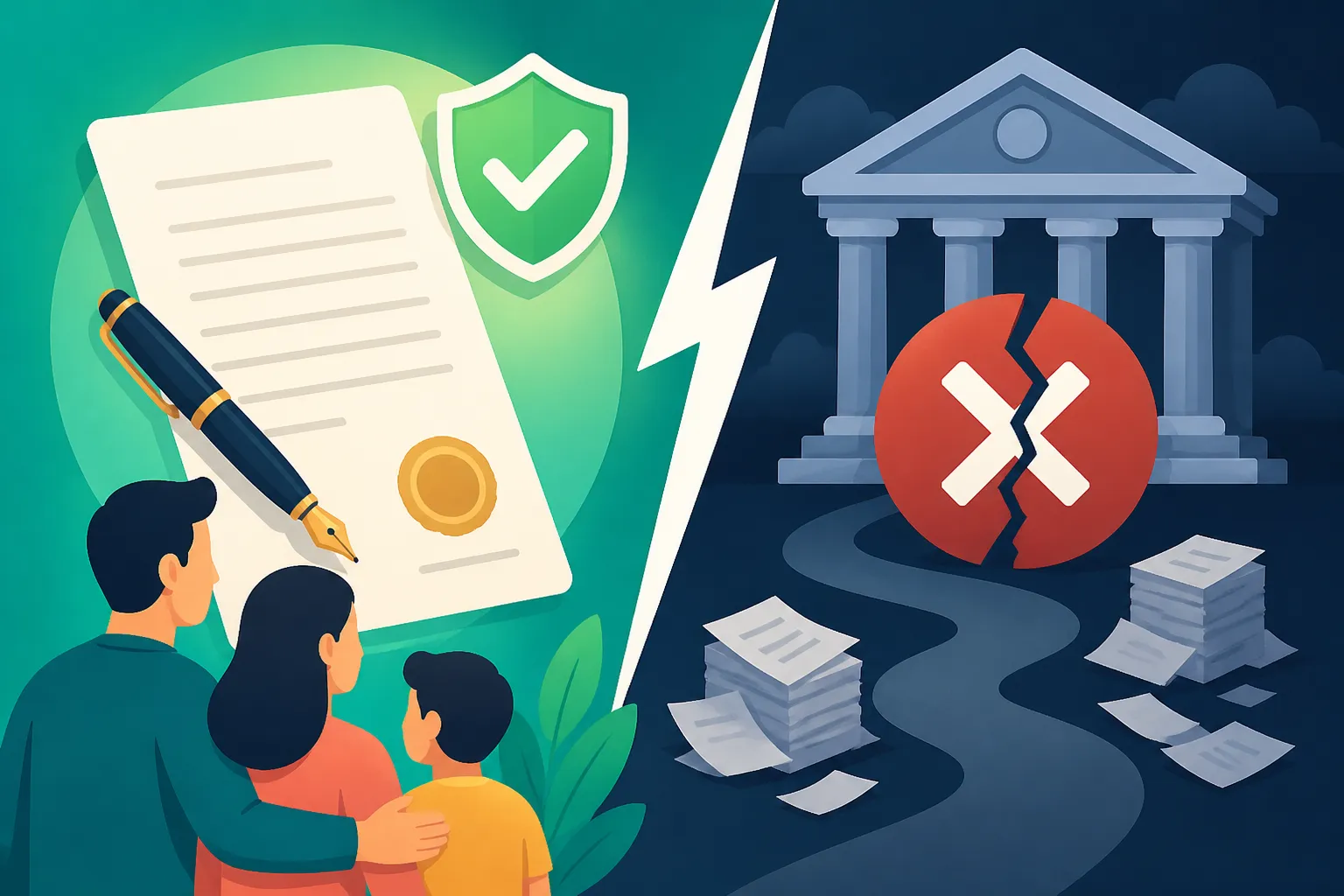
Does a Will Avoid Probate?
It's a common misconception that simply having a last will and testament means your loved ones will avoid the often lengthy and public process of probate court after you're gone. The truth is, a will actually guarantees that your assets will likely go through probate. This guide will clarify the true role of a will in estate planning and introduce you to the effective strategies that genuinely help your beneficiaries bypass the probate system.
The Common Misconception: Why Wills Don't Bypass Probate
Many people believe that writing a will is the ultimate step to streamline their estate and keep it out of court. They often envision their family simply presenting the will, and then the assets are distributed quickly and quietly. The reality is quite different, and this misunderstanding can lead to significant frustration and unexpected delays for grieving families.
The Myth of Probate Avoidance
The idea that a will somehow "avoids" probate is a widespread myth, often perpetuated by a lack of clear information or a misinterpretation of legal terms. People hear that a will dictates asset distribution and assume that means it controls everything outside of a court's purview. They might think that because they've explicitly stated their wishes in a legal document, the court's involvement becomes unnecessary. This simply isn't how the system is designed. A will is a set of instructions, and probate is the legal mechanism used to ensure those instructions are valid, followed correctly, and that all debts and taxes are paid before distribution.
Consider Sarah, who diligently drafted her will, listing her children as beneficiaries for her home and savings. She felt a sense of relief, believing she had "taken care of everything." However, upon her passing, her children learned that her will had to be submitted to the local probate court, just like anyone else's. The court then appointed an executor, validated the will's authenticity, inventoried her assets, settled her final bills, and only then permitted the distribution of the house and money to her kids. This entire process, rather than being avoided by the will, was actually initiated by it.
The Role of the Probate Court
The probate court's role is essentially to supervise the execution of your will. Think of it as a referee making sure the game is played by the rules. Without a will, the court still steps in, but instead of following your wishes, it follows state intestacy laws to distribute your property. So, in both cases—with or without a will—the court's involvement is almost always necessary to legally transfer ownership of assets held in your name alone.
The court ensures that your will is a legitimate document and reflects your final wishes. It confirms that you were of sound mind when you signed it and that no undue influence was involved. This validation process is precisely what makes probate a public proceeding. Anyone can typically view the filed will and other probate documents, making your financial and familial details a matter of public record. For many families, this lack of privacy is an unwelcome aspect of the probate process, compounding the emotional stress of loss.
What a Last Will and Testament Actually Does
While a will doesn't avoid probate, it is far from useless. In fact, it's a foundational document in any comprehensive estate plan, ensuring your wishes are known and carried out, even if a court is involved. A will is your voice after you're gone, providing crucial guidance and making the probate process smoother than it would be without one.
Directing Asset Distribution
The primary purpose of a last will and testament is to specify how your assets will be distributed after your death. You get to decide who receives your property, rather than leaving it up to state law. This is incredibly powerful, especially if you have specific family dynamics, non-traditional beneficiaries, or want to leave specific sentimental items to particular individuals.
For instance, if you want your antique watch collection to go to your nephew, or your beloved dog to be cared for by your sister with a specific sum of money for expenses, a will makes those intentions legally binding. Without a will, state intestacy laws would determine who inherits what, often prioritizing spouses and children and potentially overlooking other loved ones or specific desires. This can be especially problematic for blended families, unmarried partners, or individuals who wish to support charities. A will ensures that your unique relationships and values are respected.
Appointing Guardians for Minor Children
For parents of minor children, this is arguably the most critical function of a will. In your will, you can name legal guardians who will care for your children if both parents pass away. This designation is profoundly important, as it gives you control over who raises your children, rather than leaving it to a court to decide.
Imagine the peace of mind knowing that if something unexpected happened, your children would be in the care of someone you trust implicitly, like your sister Maria, rather than a court making a decision based on limited information. While the court still has the final say, it almost always honors the parents' wishes as expressed in a valid will. Without this provision, a court would have to appoint a guardian, and their choice might not align with what you would have wanted for your children, potentially leading to familial disputes and a prolonged, stressful process for the children involved.
Naming an Executor
Another vital role of a will is to name an executor (or personal representative) for your estate. This is the person or entity responsible for carrying out the instructions in your will, managing your assets, paying your debts, and ultimately distributing your property to your beneficiaries. Choosing an executor is a significant decision, as this individual will bear considerable responsibility during a difficult time.
A good executor should be trustworthy, organized, and capable of handling financial matters. By naming your own executor, you select someone you believe is best suited for the task, someone who understands your family dynamics and can navigate the process with care. Without a will, the court will appoint an administrator, who may be a stranger or a family member ill-equipped for the role. This can lead to delays, mismanagement, and increased costs for the estate. The clarity provided by naming an executor in your will can significantly streamline the administrative aspects of your estate.
Demystifying Probate: The Process and Its Challenges
Since a will doesn't avoid probate, it's essential to understand what probate entails. Probate is a court-supervised legal process that proves the validity of a will, inventories the deceased person's assets, pays off any debts and taxes, and then distributes the remaining assets to the rightful heirs or beneficiaries. It's designed to protect creditors and ensure proper distribution according to law or the will.
The Steps Involved in Probate
The probate process typically involves several key stages, which can vary slightly by state but generally follow a similar pattern. These steps often include:
- Filing the Will and Petition: The executor named in the will (or an interested party if there's no will) files the will and a petition with the appropriate probate court. This officially opens the probate case.
- Appointment of Executor/Administrator: The court formally appoints the executor (if there's a will) or an administrator (if there isn't one) to manage the estate. They receive "Letters Testamentary" or "Letters of Administration," giving them the legal authority to act on behalf of the estate.
- Notice to Heirs and Creditors: The executor must legally notify all interested parties, including heirs named in the will, potential heirs by state law, and known creditors. Creditors are given a specific timeframe to file claims against the estate.
- Inventory and Appraisal of Assets: The executor must identify, gather, and appraise all assets that are part of the probate estate. This can include real estate, bank accounts, investments, personal property, and more. This step can be time-consuming, especially for complex estates or those with assets in multiple locations. For example, What Is the Gross Estate? can provide more details on what assets are included.
- Payment of Debts and Taxes: Valid claims from creditors are paid from the estate's assets. The executor is also responsible for filing the deceased's final income tax returns and any estate tax returns if applicable. This is where a state's specific estate tax laws, like the Maryland Estate Tax (Plus Inheritance Tax), become particularly relevant.
- Distribution of Remaining Assets: Once all debts and taxes are settled, and the court approves the executor's accounting, the remaining assets are distributed to the beneficiaries as per the will or state law.
- Closing the Estate: The executor files a final accounting with the court, and once approved, the estate is formally closed.
Common Frustrations and Downsides
While probate serves an important legal function, it comes with several significant downsides that many people understandably wish to avoid.
- Time Consumption: Probate can be a very lengthy process. Even in straightforward cases, it can take anywhere from six months to over a year, and much longer for complex estates, those with disputes among heirs, or those subject to audits. Imagine a family needing to sell a house to pay medical bills, but being unable to do so for months due to probate delays. The wait can be emotionally and financially draining. How Long Does Probate Take? explores this further.
- Cost: Probate is not free. Costs typically include attorney fees, executor fees, court filing fees, appraisal fees, and other administrative expenses. These costs can easily eat up a significant portion of the estate, often ranging from 3% to 7% or even more of the total value. For example, Probate Cost in California can be substantial.
- Lack of Privacy: Since probate is a public court process, all documents filed, including the will, inventory of assets, and details of distribution, become public record. Anyone can access this information, which can be uncomfortable for families who prefer to keep their financial affairs private.
- Potential for Disputes: The public nature and structured timeline of probate can sometimes provide an avenue for disgruntled heirs or creditors to contest the will or the administration of the estate, leading to further delays and increased legal fees.
These frustrations are why so many individuals actively seek ways to ensure their assets avoid the probate process entirely, even if they have a perfectly valid will.
Proven Strategies to Keep Your Estate Out of Probate Court
The good news is that while a will won't bypass probate, there are several highly effective estate planning tools and strategies that can help your assets steer clear of the probate court. Implementing these can save your loved ones significant time, money, and stress during an already difficult period.
Using Revocable Living Trusts
A revocable living trust is arguably the most powerful tool for avoiding probate. Unlike a will, which simply provides instructions for the probate court, a living trust actually holds your assets during your lifetime. You, as the "grantor," transfer ownership of your assets (like your home, bank accounts, and investments) from your individual name into the name of your trust. You also typically serve as the initial trustee, maintaining complete control over your assets. You can modify or revoke the trust at any time.
Upon your passing, a "successor trustee" (whom you designate in the trust document) takes over. Because the assets are already legally owned by the trust, they don't need to go through probate to be transferred. The successor trustee simply distributes the assets to your beneficiaries according to the trust's instructions, privately and efficiently. This avoids the court's involvement, saving time and money. Many people use online services like LegalZoom to help them draft these complex documents, though consulting with an attorney is always recommended for larger or more complex estates. For a deeper dive, check out Revocable Living Trust Explained.
Here's a quick comparison of wills vs. living trusts:
| Feature | Last Will and Testament | Revocable Living Trust |
|---|---|---|
| Probate | Almost always required for assets in your name | Avoids probate for assets held by the trust |
| Privacy | Public record once filed with the court | Private document; distributions are not public |
| Effectiveness | Takes effect only after death and probate | Takes effect immediately; continues seamlessly |
| Cost | Generally lower upfront, but probate costs can be high | Higher upfront legal fees, but lower post-death costs |
| Control | Directs asset distribution; names guardians & executor | Manages assets during life, incapacity, and after death |
| Incapacity | Does not provide for incapacity; requires separate Power of Attorney | Provides for asset management if you become incapacitated |
Designating Beneficiaries
One of the simplest and most effective ways to bypass probate for specific assets is to use beneficiary designations. Many financial accounts and insurance policies allow you to name a beneficiary directly. These are often referred to as "Payable on Death" (POD) or "Transfer on Death" (TOD) designations.
- Life Insurance Policies: The proceeds from a life insurance policy go directly to the named beneficiary without passing through probate.
- Retirement Accounts: IRAs, 401(k)s, and other retirement accounts almost always have beneficiary designations. The funds are paid directly to the named individual(s) or entity.
- Bank and Brokerage Accounts: Many banks and brokerage firms offer POD or TOD options, allowing you to name a beneficiary who will automatically receive the account funds or securities upon your death.
- Real Estate: Some states offer "Transfer on Death" (TOD) deeds for real estate, allowing you to name a beneficiary who will inherit the property directly upon your death, bypassing probate.
These direct designations are incredibly powerful. Even if you have a will that states your bank account should go to your daughter, if the account has a POD designation naming your son, the POD designation will override the will's instruction because the asset never enters the probate estate. Therefore, reviewing and updating your beneficiary designations regularly is a crucial step in probate avoidance. For more information, see Beneficiary Designations: The Probate Bypass.
Joint Ownership with Rights of Survivorship
Holding property in joint ownership with rights of survivorship is another common method to avoid probate, particularly for real estate or bank accounts shared by married couples. When an asset is owned this way, if one owner passes away, their share automatically transfers to the surviving owner(s) without needing to go through probate.
For example, if a married couple owns their home as "joint tenants with rights of survivorship," upon the death of one spouse, the home automatically becomes the sole property of the surviving spouse. This is a seamless transfer and bypasses the probate court entirely for that specific asset. While this can be a simple solution for couples, it's important to understand that it doesn't solve the probate problem when the last owner dies. At that point, if the asset is still in their individual name, it will likely go through probate unless other arrangements, like a living trust, are in place. Furthermore, adding someone as a joint owner has immediate implications; they gain current ownership rights, which could have gift tax consequences and exposes the asset to their creditors. Exploring options like Joint Ownership to Avoid Probate requires careful consideration of these factors.
Other Probate Avoidance Tools
Beyond trusts, beneficiary designations, and joint ownership, there are a few other methods that can help streamline or avoid probate in specific situations:
- Small Estate Affidavits: Many states have provisions for "small estates" that fall below a certain monetary threshold (which varies significantly by state, from a few thousand dollars to over $100,000). If an estate qualifies as a small estate, it may be able to go through a simplified probate process or even avoid formal probate entirely by using a small estate affidavit. This allows heirs to claim assets without extensive court involvement.
- Gifting: Gifting assets during your lifetime can reduce the size of your probate estate. However, significant gifts can have gift tax implications and impact your lifetime gift and estate tax exemption. While it technically removes assets from your probate estate, it's a strategy that requires careful planning to avoid unintended tax consequences.
- LegalZoom and Other Online Platforms: For individuals with relatively simple estates, online platforms like LegalZoom can provide resources and forms to create wills, trusts, and other estate planning documents. These tools can be a cost-effective way to get started with your planning, though complex situations often benefit from personalized legal advice. When considering a will or a trust, thinking about Will vs Trust: Which Do You Need? is a crucial step that LegalZoom and similar services can help you address the documentation for, but not necessarily the strategic advice.
Understanding these alternatives is key to truly planning an estate that protects your loved ones from the burdens of probate. A will is important, but it's just one piece of a much larger, more sophisticated puzzle.
Disclaimer
This article is for general informational purposes only and does not constitute professional advice. Laws and regulations vary by location and change over time. Consult a qualified professional for guidance on your specific situation.