Does Florida Have an Estate Tax?
The thought of taxes, especially those that come into play after a loved one has passed, can be incredibly daunting and confusing. It's a situation many Floridians, particularly those who have built substantial wealth, find themselves wondering about: Does the Sunshine State claim a piece of your estate when you're gone? This guide is here to clear up that common confusion and provide a comprehensive look at Florida's stance on estate taxes, and what that means for your financial legacy.
The Straight Answer: Florida's Estate Tax Status
Let's cut right to the chase because this is often the most pressing question on people's minds. When it comes to state-level taxes on your assets after you pass away, Florida offers a clear answer that brings relief to many.
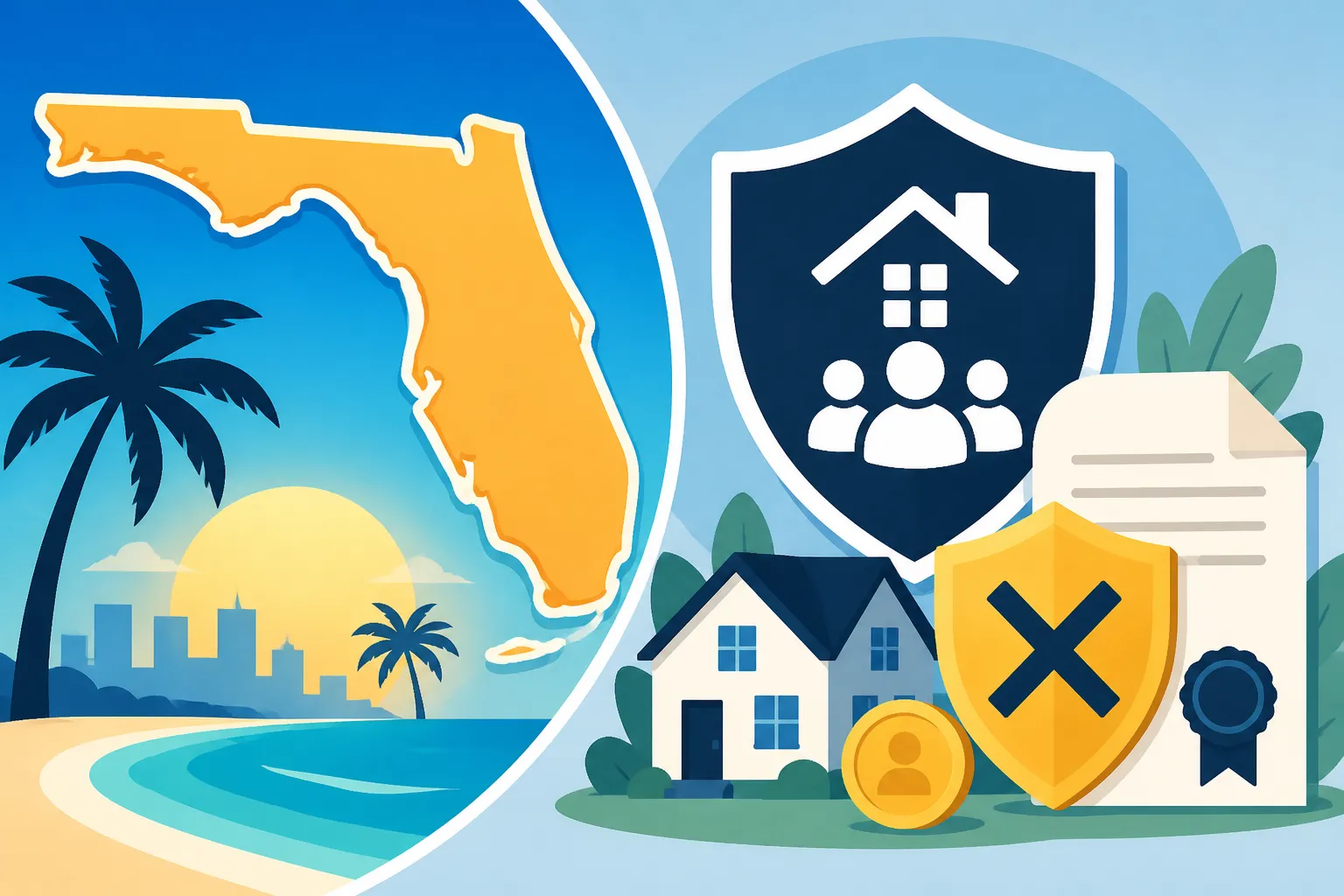
No State-Level Estate Tax
You might be surprised to learn that Florida is one of many states that does not impose its own estate tax. That's right, the state of Florida itself won't take a cut of your inheritance based on the value of your estate. This has been the case since January 1, 2005, when the state officially repealed its estate tax. Before that, Florida's estate tax was directly tied to the federal estate tax credit, meaning if you paid federal estate tax, a portion of that would go to the state. But those days are long gone.
This makes Florida a particularly attractive state for retirees and individuals with significant assets looking to minimize their overall tax burden. The lack of a state estate tax is a big reason why so many people choose to establish residency here, along with the absence of a state income tax. It simplifies things considerably for your heirs, as they won't have to navigate a separate state-level filing or payment for estate taxes once you're gone. This is a crucial distinction, as some states, like New York or Massachusetts, have their own estate taxes that can significantly impact a family's inheritance.
Distinguishing State vs. Federal Estate Tax
Now, while Florida doesn't have a state estate tax, it's absolutely vital to understand that the federal estate tax is an entirely different beast. Many people conflate the two, thinking that if their state doesn't have one, they're completely off the hook. That's not always the case, especially for very wealthy individuals.
The federal estate tax is imposed by the U.S. government on the transfer of a deceased person's property and assets to their beneficiaries. It's a tax on the privilege of transferring property at death. The federal estate tax applies uniformly across all states, regardless of whether a state imposes its own tax. So, while your Florida domicile means you won't owe Florida a separate estate tax payment, your estate could still be subject to federal estate tax if its value exceeds the federal exemption amount.
Understanding the difference between the state and federal estate tax is foundational for any effective estate plan. The question of "Estate Tax vs Inheritance Tax: What's the Difference?" is often brought up here, and it's important to remember that estate tax is on the estate, while inheritance tax is on the beneficiary. Florida has neither, but the federal government may have its hand out for the estate itself.
Understanding the Federal Estate Tax for Florida Residents
Since Florida has no estate tax, the primary concern for high-net-worth individuals in the Sunshine State shifts entirely to the federal level. It's a national tax, and its rules apply to everyone, regardless of where they reside.
Who Pays Federal Estate Tax?
The good news for most Americans, including those living in Florida, is that the federal estate tax only affects a tiny fraction of the wealthiest individuals. The federal estate tax exemption is incredibly high. For 2026, the federal estate tax exemption is projected to be around $15 million per individual. This means that if your total estate (which includes all your assets like real estate, investments, retirement accounts, life insurance, and personal property) is valued below this threshold, your heirs won't owe any federal estate tax.
For married couples, this exemption is effectively doubled, meaning they can pass on roughly $30 million without federal estate tax implications, thanks to portability rules. This makes "Federal Estate Tax Exemption 2026 ($15 Million)" a critical piece of information for comprehensive estate planning. To illustrate, if a Florida resident passes away in 2026 with an estate valued at $14 million, their estate would fall below the $15 million federal exemption. Therefore, no federal estate tax would be due. Only the portion of an estate that exceeds this generous exemption is subject to the federal estate tax rate, which can go as high as 40%.
It's also worth noting that these exemption amounts are indexed for inflation, meaning they typically increase slightly each year. However, there's a significant "sunset" provision looming. In 2026, if Congress doesn't act, the current exemption levels are set to revert to roughly half of their current amount, adjusted for inflation from 2017 levels. This potential change is a huge consideration for anyone whose estate is approaching or exceeds the current exemption, even if they're enjoying Florida's tax-free status now. Financial advisors often use tools from platforms like SmartAsset to help clients project how these changes might impact their future estate plans.
How the Federal Estate Tax is Calculated
Calculating the federal estate tax is a multi-step process that starts with determining the "gross estate." This isn't just the cash in your bank account; it's a comprehensive inventory of everything you own or have an interest in at the time of your death. This can include:
- Real Estate: Your primary residence, vacation homes, investment properties, and any land you own.
- Tangible Personal Property: Vehicles, artwork, jewelry, collectibles, and household furnishings.
- Financial Accounts: Bank accounts, brokerage accounts, stocks, bonds, mutual funds, and other investments.
- Retirement Accounts: IRAs, 401(k)s, 403(b)s, and other qualified plans.
- Life Insurance Policies: If you own the policy, the death benefit is included, even if it goes directly to beneficiaries.
- Business Interests: Ownership in any businesses or partnerships.
Once the "What Is the Gross Estate?" is determined, certain deductions are applied. These can include debts (mortgages, loans), administrative expenses of the estate (appraisal fees, legal fees, executor commissions), charitable bequests, and the unlimited marital deduction for assets passing to a surviving spouse who is a U.S. citizen. After these deductions, you arrive at the "taxable estate."
Finally, the federal estate tax exemption is applied to the taxable estate. If the taxable estate is less than the exemption, no tax is owed. If it's more, the excess is taxed at progressive rates, with the top rate currently at 40%. Platforms like SmartAsset provide excellent resources that break down the complexities of "How Estate Tax Is Calculated" and can help you understand your potential liability. For example, if a Florida resident has a gross estate of $18 million, but has $1 million in debts and $1 million in administrative expenses, their taxable estate would be $16 million. If the exemption is $15 million, only $1 million would be subject to federal estate tax.
The Impact of the 2026 Sunset
The year 2026 is a significant one for federal estate tax planning. The provisions of the Tax Cuts and Jobs Act (TCJA) of 2017, which dramatically increased the federal estate tax exemption, are scheduled to "sunset" or expire at the end of 2025. This means that, absent new legislation, the exemption amount will effectively be cut in half starting January 1, 2026. While the exact figure will be adjusted for inflation, it's widely expected to drop to roughly $7 million to $8 million per individual.
For Florida residents with estates currently below the $15 million threshold but above the projected $7-$8 million future threshold, this change is critical. An estate that is entirely free of federal estate tax today could suddenly find itself facing a substantial tax bill in 2026. This potential shift necessitates a review of existing estate plans, even in a state like Florida where state estate taxes aren't a concern. Individuals who might be impacted could consider strategies like making significant lifetime gifts before the sunset to utilize the higher current exemption. However, such decisions need careful consideration and professional guidance to navigate the intricate tax rules, including potential clawback rules for large gifts. The looming "Federal Estate Tax Rate Explained (40%)" after the sunset makes proactive planning essential.
What About Inheritance Tax in Florida?
Beyond the estate tax, another common question that often arises, especially for those new to estate planning or moving to Florida, is about inheritance taxes. It's easy to confuse the two, but they are fundamentally different in who pays the tax.
No Inheritance Tax Either
Just as Florida does not impose an estate tax, it also does not have an inheritance tax. This is another major benefit for those who choose to live in or inherit from someone living in the state. An inheritance tax is paid by the beneficiaries who receive assets from an estate, rather than by the estate itself. So, if you inherit money, property, or other assets from a deceased individual whose estate is in Florida, the state won't charge you a tax on that inheritance.
This makes Florida one of the most tax-friendly states for heirs. You receive your inheritance without a state-mandated deduction coming off the top for inheritance tax purposes. This is a huge relief, particularly when you compare it to the few states that do impose such taxes, where the amount you receive can be significantly reduced depending on your relationship to the deceased.
States That Do Have Inheritance Tax
To truly appreciate Florida's tax-friendly environment, it helps to understand that not all states operate this way. Currently, only a handful of states levy an inheritance tax: Iowa (though it's being phased out), Kentucky, Maryland, Nebraska, New Jersey, and Pennsylvania.
Each of these states has its own rules, exemptions, and rates, which often vary based on the beneficiary's relationship to the deceased. For instance, in Pennsylvania, direct descendants like children or grandchildren pay a lower rate (4.5%) than siblings (12%) or non-relatives (15%). Spouses are typically exempt in all inheritance tax states. Knowing "Which States Have an Inheritance Tax?" highlights just how unique Florida's position is. For someone inheriting a significant sum from a relative in, say, New Jersey, a portion of that inheritance would indeed be taxed by the state. This is a stark contrast to receiving the same inheritance from a Florida resident, where no such state tax would apply to the beneficiary.
This absence of both estate and inheritance taxes further solidifies Florida's reputation as a desirable location for wealth preservation and transfer. However, always remember that federal income taxes on certain inherited assets, like traditional IRA distributions, can still apply regardless of state tax laws.
Key Estate Planning Considerations for Florida Residents
Even without state estate or inheritance taxes, estate planning remains absolutely critical for Florida residents. It’s not just about minimizing taxes; it’s about ensuring your wishes are honored, your assets are distributed smoothly, and your loved ones are taken care of during what is inevitably a difficult time.
The Importance of a Will or Trust
For anyone in Florida, having a well-drafted will is foundational. A will allows you to dictate how your assets will be distributed, name guardians for minor children, and designate an executor to manage your estate. Without a will, Florida's intestacy laws will determine how your assets are divided, which might not align with your personal wishes. This can lead to family disputes and unnecessary complications.
However, for many Florida residents, especially those with larger estates or complex family situations, a revocable living trust often offers superior benefits to a will alone. A trust can help avoid probate, a court-supervised process that can be lengthy, public, and expensive. When assets are properly titled in a living trust, they can be distributed to your beneficiaries quickly and privately, without court involvement. This is a significant advantage, even in states like Florida where probate might be streamlined compared to others. A trust also provides more control over how and when assets are distributed, which can be invaluable for protecting beneficiaries who are minors, spendthrifts, or have special needs. It's often debated, "Will vs Trust: Which Do You Need?" and for many in Florida, a trust offers more robust planning.
For higher net worth individuals, more complex trusts, like irrevocable life insurance trusts (ILITs) or charitable trusts, can be powerful tools to reduce potential federal estate tax liability, protect assets from creditors, or provide for philanthropic goals. These are sophisticated strategies that go beyond simple asset distribution and require expert legal guidance. Understanding the "Types of Trusts Explained (ILIT, GRAT, QTIP & More)" can open up many planning opportunities.
Utilizing Beneficiary Designations
One of the simplest yet most effective ways to ensure your assets pass directly to your intended heirs, bypassing the probate process entirely, is through beneficiary designations. This applies to accounts like life insurance policies, retirement accounts (IRAs, 401(k)s), and "payable on death" (POD) or "transfer on death" (TOD) accounts.
When you name a beneficiary on these accounts, the assets are transferred directly to that person upon your death, outside of your will and without going through probate. This is an incredibly powerful tool for Florida residents, as it provides a quick and efficient way to transfer significant assets, saving your heirs time and potentially costly legal fees associated with probate. Just imagine the ease for your family if your retirement savings and life insurance proceeds automatically go to them without needing court approval. However, it's crucial to regularly review and update these designations, especially after major life events like marriage, divorce, or the birth of children, to ensure they align with your current wishes. A mismatch between your will and your beneficiary designations can lead to unintended consequences, so consistency is key.
Considering a Domicile Change for Tax Purposes
Florida's favorable tax environment—no state income tax, no state estate tax, and no state inheritance tax—makes it a popular destination for those seeking to minimize their overall tax burden. This is particularly true for individuals moving from states with high income, property, or death taxes, such as California, New York, or Illinois. Establishing domicile in Florida can offer significant financial advantages over time.
However, simply buying a vacation home in Florida isn't enough to change your domicile. Domicile is a legal term referring to your true, fixed, and permanent home, the place to which you intend to return whenever you are absent. States with high taxes are often aggressive in proving that former residents are still domiciled there. To legally establish Florida domicile, you typically need to demonstrate a clear intent through various actions: spending more than six months a year in Florida, obtaining a Florida driver's license, registering your car in Florida, registering to vote in Florida, filing a Declaration of Domicile, and moving your primary banking and professional relationships to the state. All these steps are crucial to ensure your estate is recognized as a Florida estate, thereby benefiting from the state's tax laws and avoiding potential claims from your former state. For some, the specific concerns might involve navigating issues like "The Estate Tax Cliff Explained (New York & More)," which could be completely avoided by properly establishing Florida as their domicile.
When someone passes away, the complexity of dealing with their affairs can be overwhelming. Knowing where you stand regarding state-level taxes can provide significant peace of mind. For Florida residents, the picture is refreshingly clear compared to many other parts of the country.
| State | State Estate Tax? | State Inheritance Tax? | Notes |
|---|---|---|---|
| Florida | No | No | One of the most tax-friendly states; only federal estate tax applies for very large estates. |
| New York | Yes | No | Estate tax exemption around $6.94 million (2024), but with a "cliff" that taxes the entire estate if it exceeds the exemption by more than 5%. |
| Massachusetts | Yes | No | Estate tax exemption $2 million (2024); taxes the entire estate above this threshold. |
| Maryland | Yes | Yes | Estate tax exemption $5 million (2024); also has a 10% inheritance tax, though spouses, children, and some others are exempt. Maryland is unique in having both. |
| Pennsylvania | No | Yes | No estate tax, but has an inheritance tax that varies by relationship (e.g., 4.5% for direct descendants, 12% for siblings, 15% for others). |
| Nebraska | No | Yes | Inheritance tax varies by county and relationship to the deceased; closest relatives generally have a higher exemption but still pay if above it. |
| Washington | Yes | No | Estate tax exemption around $2.193 million (2024); rates can go up to 20%. |
This table, which SmartAsset also outlines in its comparison tools, demonstrates why Florida is such a magnet for those looking to avoid state-level death taxes. While states like Washington and Maryland impose significant state-level taxes, Florida provides a clear path for wealth transfer without that additional burden. It's a key factor for those considering where to establish their permanent residence. Knowing the "States With No Estate Tax (2027)" can really put Florida's position into perspective for your long-term planning.
In conclusion, for Florida residents, the good news is that the state itself doesn't impose an estate tax or an inheritance tax. This is a significant advantage, freeing your heirs from state-level tax burdens on their inheritance. However, it's crucial not to overlook the federal estate tax, which can still apply to very large estates, especially with the upcoming exemption changes in 2026. This is why thoughtful and proactive estate planning, including wills, trusts, and beneficiary designations, remains essential to ensure your wishes are honored and your legacy is protected for generations to come. Don't let the absence of state taxes lull you into complacency; smart planning is always the best approach.
Disclaimer
Please note that this article is intended for informational purposes only and does not constitute legal or financial advice. Tax laws are complex and subject to change. It is highly recommended to consult with a qualified estate planning attorney or financial advisor to discuss your specific situation and create a personalized estate plan.