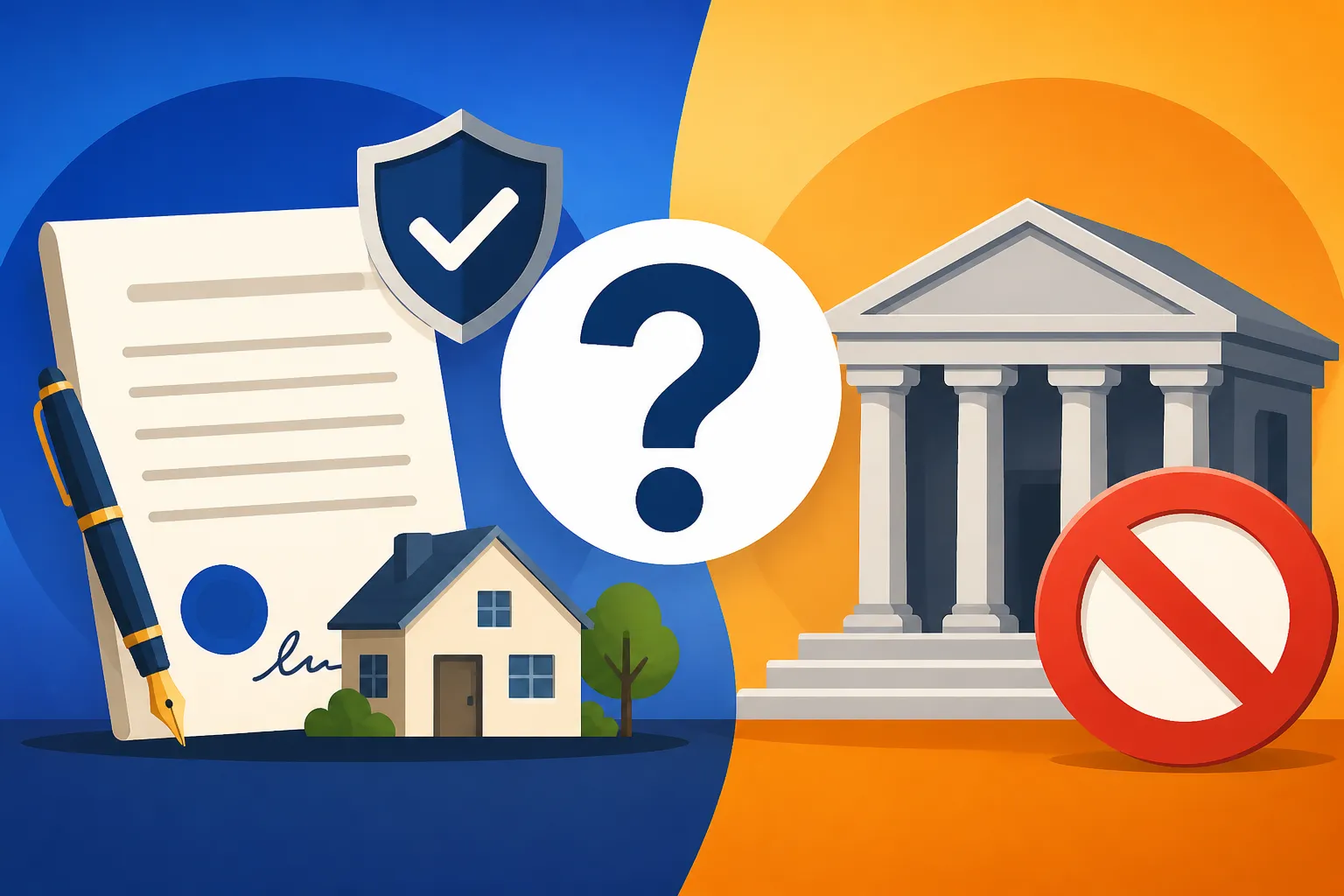
Is Probate Required If There Is a Will?
It’s a natural assumption: you’ve gone through the effort of creating a will, so surely that means your loved ones won't have to deal with the complexities of probate court when you're gone, right? Unfortunately, that's a common misconception that can lead to significant headaches and delays for your family. The truth is, while a will is an absolutely crucial document, it doesn't magically make the probate process disappear. This comprehensive guide will unravel the relationship between a will and probate, clarifying why your estate might still go through court and how you can proactively plan to ease the burden on those you leave behind.
Understanding What Probate Really Is
Before we dive into the nuances of wills, let's get a firm grasp on what probate actually entails. Many folks hear "probate" and immediately think of a lengthy, expensive, and stressful legal battle, and while it can be all those things, it's essentially the legal process of proving a will is valid and overseeing the distribution of a deceased person's assets. Think of it as the court's way of ensuring everything is handled legitimately and according to law.
The Court's Role in Validating a Will
When someone passes away, especially if they have assets solely in their name, the court needs to step in. Even if you have a perfectly drafted will, the court's job is to officially validate that document. This means confirming that the will is the most recent, legally binding declaration of your wishes. They check for things like proper signing, witnessing, and whether anyone is contesting its authenticity.
Once the will is deemed valid, the court appoints an executor (the person you named in your will to manage your estate) and grants them the legal authority to act on behalf of the estate. Without this court-ordered authority, banks, investment firms, and real estate offices won't release assets or allow them to be sold, even if your will clearly states who gets what. This initial validation process is a fundamental part of "What Is Probate? Complete Guide" and is necessary even with a will in place.
Why Estates Go Through Probate
The primary reason an estate goes through probate, even with a will, is to ensure that assets are distributed correctly, debts are paid, and everything is done transparently and legally. Imagine a scenario where there was no court oversight: creditors could be ignored, beneficiaries might not receive their rightful inheritance, or family disputes could escalate without a neutral party to enforce the will's terms.
Probate serves several vital functions:
- Authenticating the Will: As mentioned, it legally confirms that your will is legitimate.
- Appointing an Executor: It gives legal authority to the person you chose to manage your affairs.
- Inventorying Assets: All assets are identified and cataloged. This includes everything from bank accounts and real estate to personal belongings. For a deeper dive into what constitutes the taxable estate, you might want to read "What Is the Gross Estate?".
- Paying Debts and Taxes: Ensures that all outstanding debts, taxes (including any state or federal estate taxes), and administrative costs are settled before distribution to heirs.
- Distributing Remaining Assets: Oversees the transfer of property to the beneficiaries named in your will.
- Resolving Disputes: Provides a legal forum for addressing any challenges to the will or disagreements among beneficiaries.
Without this formal process, there's no official way for your executor to prove they have the right to liquidate assets, pay bills, or transfer titles.
The Will's Function Within Probate
So, if a will doesn't bypass probate, what's its purpose? A will is your voice from beyond, a clear instruction manual for the probate court and your loved ones. It dictates how you want your assets handled, rather than leaving it up to state law. This distinction is critical because dying without a will, known as "Dying Without a Will (Intestate) Explained", means the state decides who gets what, often in ways that don't align with your true wishes.
Directing Asset Distribution and Appointing an Executor
The main power of your will lies in its ability to dictate who receives your property. Without it, state intestacy laws kick in, which typically distribute assets based on a strict hierarchy of family relationships, not necessarily your preferences. For example, your state's law might give a larger share to a distant relative than to a beloved friend or charity if you didn't specify otherwise.
Beyond asset distribution, your will also allows you to:
- Name an Executor: This is perhaps one of the most important roles of a will. You choose the person you trust most to navigate the probate process, pay debts, and distribute assets. This saves your family the additional stress of the court appointing someone they might not know or trust.
- Appoint Guardians for Minor Children: If you have children under 18, your will is the only place you can legally designate who will care for them if you and their other parent pass away. This is an emotionally charged decision that a will handles beautifully.
- Make Specific Gifts: You can specify who gets your grandmother's antique watch, your prized art collection, or any other specific items. This prevents family squabbles over sentimental possessions.
- Handle Digital Assets: You can provide instructions for your digital accounts and online presence, from social media to cryptocurrencies.
The will is essentially your script for the probate process, ensuring that your final wishes are known and followed, which is a key reason why "Do I Need a Will?" is such an important question for everyone, regardless of estate size.
Limits of a Will's Power
While powerful, a will isn't omnipotent. It only governs assets that are held solely in your name and do not have a beneficiary designation or co-ownership structure. This is a common point of confusion. Many assets are designed to pass outside of probate automatically, regardless of what your will says.
For instance, if you've named a beneficiary on your life insurance policy, that money goes directly to the named individual upon your death, bypassing probate entirely. Your will cannot override this beneficiary designation. The same applies to retirement accounts like 401(k)s and IRAs, and even some bank accounts set up as "Payable on Death (POD) Accounts." If your will states your sister should receive your life insurance payout, but your ex-spouse is still listed as the beneficiary, the ex-spouse will receive the money. This is why keeping beneficiary designations up-to-date is just as critical as having a will.
Understanding these limitations is vital for effective estate planning. It highlights that a will is a central piece, but not the only piece, of the puzzle.
Assets That Can Bypass Probate (Even with a Will in Hand)
The good news is that many types of assets are designed to transfer ownership directly to beneficiaries without going through the probate court. This can significantly reduce the complexity, time, and cost of settling an estate. Knowing which assets bypass probate is a cornerstone of smart estate planning and a major component of "How to Avoid Probate".
Jointly Owned Property and Beneficiary Designations
These are some of the most common ways assets bypass probate:
- Joint Tenancy with Right of Survivorship (JTWROS): This is very common for married couples or co-owners of real estate and bank accounts. When one owner passes away, their share automatically transfers to the surviving owner(s) without needing probate. The property passes by operation of law, not through the will.
- Tenancy by the Entirety: Similar to JTWROS, but exclusively for married couples in certain states, offering additional creditor protection.
- Community Property with Right of Survivorship: In community property states like California, Nevada, or Texas, spouses can title assets this way. When one spouse dies, the property automatically transfers to the surviving spouse.
- Transfer-on-Death (TOD) or Payable-on-Death (POD) Accounts: These designations can be added to bank accounts, investment accounts, and even real estate (in some states via a "Transfer on Death Deed Explained"). You name a beneficiary, and upon your death, the assets pass directly to them, circumventing probate. This is an incredibly simple and effective way to ensure smooth transitions for specific assets. "Beneficiary Designations: The Probate Bypass" is an excellent resource for more details on this strategy.
- Life Insurance Policies: The proceeds of a life insurance policy go directly to the named beneficiary. They are typically not part of your probate estate, although they might be included in your gross estate for federal or state estate tax calculations.
- Retirement Accounts (IRAs, 401(k)s, 403(b)s): Just like life insurance, these accounts allow you to name primary and contingent beneficiaries. The funds are distributed directly to these individuals, outside of probate.
- Annuities: Similar to retirement accounts, annuities often have beneficiary designations that allow for direct transfer upon death.
It's absolutely essential to regularly review and update all your beneficiary designations, especially after major life events like marriage, divorce, or the birth of children. An outdated designation can lead to unintended consequences, where assets go to someone you no longer intended, regardless of what your will states.
Trusts: The Ultimate Probate Bypass Tool
If you're serious about avoiding probate for the bulk of your estate, then a trust is often the most effective solution. A trust is a legal arrangement where you (the grantor) transfer ownership of your assets to a trustee (who can be you during your lifetime, or someone else) to hold for the benefit of your chosen beneficiaries.
Here's why trusts are so powerful in bypassing probate:
- Assets are Owned by the Trust: When you place assets into a trust, they are no longer legally owned by you as an individual; they are owned by the trust. Upon your death, the trust continues to exist and operate under the terms you established, without needing court intervention to transfer ownership.
- Private Process: Unlike probate, which is a public court process, a trust administration is private. This can be a huge relief for families who prefer to keep their financial affairs confidential.
- Continuity of Management: If you become incapacitated, the successor trustee you named in your trust can immediately step in to manage your assets without the need for a conservatorship or guardianship court proceeding.
- Flexibility and Control: Trusts offer a high degree of control over how and when your assets are distributed to beneficiaries, even for generations. You can set conditions, protect beneficiaries from creditors, or provide for special needs individuals.
- Cost and Time Savings: While setting up a trust has upfront costs, it can save your heirs considerable time and money by avoiding the potentially lengthy and expensive probate process.
The most common type of trust used for probate avoidance is a "Revocable Living Trust Explained". This type of trust allows you to retain full control over your assets during your lifetime, acting as your own trustee. You can modify or revoke the trust at any time. Upon your death, your named successor trustee takes over, distributing assets according to your instructions, completely outside of probate. Other types of trusts, like "Types of Trusts Explained (ILIT, GRAT, QTIP & More)", serve different estate planning goals, often related to tax minimization.
Many people find the idea of setting up a trust daunting, but services like LegalZoom offer accessible options for drafting these complex documents, though consulting with an attorney for personalized advice is always recommended for larger or more complex estates.
Strategies to Minimize or Avoid Probate with a Will
Even if you have a will, there are proactive steps you can take to make the post-death transition as smooth as possible, effectively reducing or even eliminating the need for a full probate process. The goal is to maximize the number of assets that pass outside of your will.
Smart Asset Titling and Designations
Reviewing how your assets are titled and ensuring all beneficiary designations are up-to-date is a relatively simple yet highly effective strategy.
- Review All Beneficiary Designations: This can't be stressed enough. Go through every financial account – IRAs, 401(k)s, life insurance policies, annuities – and confirm who is listed as the primary and contingent beneficiary. Make sure these reflect your current wishes. An old beneficiary designation, say from a previous marriage, will override your will.
- Consider POD/TOD Designations for Bank and Brokerage Accounts: For checking, savings, and investment accounts, adding a Payable on Death (POD) or Transfer on Death (TOD) designation allows the funds to go directly to your chosen beneficiaries without probate. It’s like a mini-beneficiary designation for specific accounts.
- Utilize Joint Ownership Wisely: While joint ownership can be a great probate-avoidance tool, especially for married couples, it also has potential downsides. When you add someone as a joint owner, they immediately have an ownership interest in that asset. This could expose the asset to their creditors or become problematic if your relationship with that person sours. It also means you give up some control.
- Understand State-Specific Options: Some states offer unique probate-avoidance tools. For instance, many states have "Small Estate Affidavit Explained" procedures for estates below a certain value, allowing for an expedited or simplified process. For real estate, some states allow "Transfer on Death Deed Explained" to name a beneficiary for your home.
It's critical to regularly review your asset titling and beneficiary designations, ideally as part of an overall "Estate Planning Checklist", to ensure they align with your will and your overarching estate plan.
Considering a Living Trust
For many individuals and families, a revocable living trust is the most robust way to ensure that most, if not all, of their assets bypass probate. While setting up a trust involves more initial effort and cost than just a will, the long-term benefits for your heirs can be substantial.
Here's how a living trust helps:
- Creation of the Trust Document: You work with an attorney or use a service like LegalZoom to create a legal trust document. This document names you as the initial trustee and beneficiary, and designates successor trustees and beneficiaries upon your death or incapacity.
- Funding the Trust: This is the most crucial step. You must formally transfer ownership of your assets (like your home, bank accounts, investment portfolios, and valuable personal property) from your individual name into the name of your trust. If you create a trust but don't "fund" it, those assets will still go through probate. This is a common pitfall.
- Pour-Over Will: Even with a living trust, it's wise to have a "Pour-Over Will Explained". This is a backup will that catches any assets you might have forgotten to transfer into your trust before you passed away. It directs that these forgotten assets be "poured over" into your trust to be distributed according to its terms. These remaining assets would still go through probate, but then land in your trust rather than being distributed by state law.
- Privacy and Efficiency: As discussed, assets held in a living trust are managed and distributed privately by your successor trustee, often much faster than the probate court process, which can sometimes take "How Long Does Probate Take?" for a year or more, depending on the state and estate complexity. This also contributes to lower overall administration costs compared to a protracted probate.
While a will is your instruction manual for the court, a living trust acts more like a private road, allowing your assets to bypass the court entirely. Deciding between "Will vs Trust: Which Do You Need?" depends heavily on your individual circumstances, asset values, and desire for privacy and control. Consulting with an experienced estate planning attorney is paramount to determine the best strategy for your unique situation. They can help you weigh the "Living Trust Cost: What to Expect" against the benefits and help you execute the necessary steps to fund your trust correctly.
By proactively addressing asset titling, beneficiary designations, and considering a living trust, you can create a comprehensive estate plan that truly protects your family and ensures your wishes are honored with minimal hassle and expense.
| Feature | Will | Revocable Living Trust |
|---|---|---|
| Probate Required? | Yes, for assets held solely in your name | No, for assets properly transferred into the trust |
| Privacy | Public record (probate court) | Private |
| Cost | Lower upfront, potentially higher post-death (probate fees) | Higher upfront, generally lower post-death (no probate) |
| Timeframe | Can be lengthy (months to years) | Quicker distribution post-death |
| Incapacity | Does not address incapacity (requires separate Power of Attorney) | Provides for immediate successor trustee management |
| Asset Control | Effective upon death | Effective immediately upon funding the trust, grantor retains control |
| Beneficiary Disputes | Resolved in court | Resolved within the trust document, privately |
| Guardianship | Can name guardians for minor children | Cannot name guardians for minor children (needs a will for this) |
Disclaimer
This article is for general informational purposes only and does not constitute professional advice. Laws and regulations vary by location and change over time. Consult a qualified professional for guidance on your specific situation.