Vermont Estate Tax Exemption 2026
Many families who have spent decades building a life in the Green Mountain State often assume that estate taxes are only a concern for the ultra-wealthy in places like New York or Florida. However, Vermont’s specific tax laws can catch residents off guard, potentially leaving heirs with a massive bill. This guide explains the Vermont estate tax exemption for 2026 and provides actionable steps to protect your family legacy.
Understanding the Vermont Estate Tax Landscape
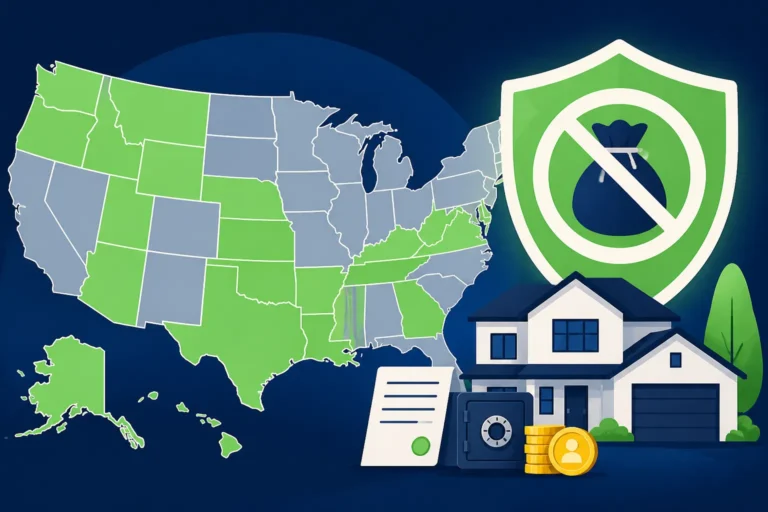
Vermont is one of a handful of states that continues to levy its own estate tax independently of the federal government. For 2026, the Vermont estate tax exemption remains set at $5 million. This is a critical number for residents to remember because it is significantly lower than the federal exemption, which is $15,000,000 for 2026.
The way Vermont handles this tax is relatively straightforward but unforgiving. It uses a flat rate of 16% on any assets that exceed the $5 million threshold. Unlike the federal system, which uses a progressive scale that climbs toward 40%, Vermont hits you with that 16% from the very first dollar over the limit. When you consider the rising value of real estate in towns like Stowe, Burlington, or Woodstock, it becomes clear that many "regular" families—especially those with significant land holdings or small businesses—could easily cross this line.
One of the biggest frustrations for Vermont residents is that the state does not currently index this exemption for inflation. While federal limits move up slightly every year to account for the economy, Vermont's $5 million has stayed put. This phenomenon, often called "bracket creep," means that as your home value increases and your retirement accounts grow, you are effectively being pushed closer to a tax liability without actually becoming "richer" in terms of purchasing power. You can use resources like SmartAsset to see how these fixed exemptions compare to other states in the Northeast.
How the Vermont Exemption Compares to Federal Standards
A common point of confusion is the difference between state and federal obligations. It is entirely possible to owe the state of Vermont hundreds of thousands of dollars while owing the IRS absolutely nothing. This happens because of the massive gap between the two exemption levels. Understanding State vs Federal Estate Tax: How They Stack is essential for anyone doing long-term planning, as the two systems operate on completely different rules.
In 2026, we are looking at a major shift in federal law. The federal basic exclusion amount for 2026 is $15,000,000. Even with that drop, the Federal Estate Tax Exemption 2026 ($15 Million) remains a distant target for most, while the Vermont $5 million limit remains a very real hurdle.
Another vital distinction is "portability." On a federal level, if one spouse dies and doesn't use their full exemption, the surviving spouse can "inherit" that unused portion. Vermont does not allow this. If you are a married couple in Vermont and your estate is held jointly, you might accidentally waste one spouse's $5 million exemption if you don't have the right trust structures in place. This is where many families get tripped up; they assume being married protects them from state taxes, only to find out that the state views each individual's exemption as a "use it or lose it" benefit.
Calculating Your Taxable Estate in Vermont
To know if you have a problem, you first have to know what the state counts as your "estate." Spoiler alert: It’s almost everything. Many people believe that certain assets, like their family home or life insurance policies, are exempt. In reality, the Vermont Department of Taxes looks at your "gross estate," which includes the fair market value of all your property at the time of your death.
If you own a home, a camp on Lake Champlain, several vehicles, and a robust 401(k), you are likely closer to the $5 million mark than you think. People often ask, Does My House Count Toward State Estate Tax? and the answer is a resounding yes. In fact, for many Vermonters, real estate is the primary driver of estate tax liability. Since property values have surged across the state, even a modest family farm or a large plot of timberland can push an estate over the limit.
It is also important to consider life insurance. A common mistake is thinking that because a death benefit is paid out to a beneficiary, it isn't part of the estate. However, if you "own" the policy, the value is included in your taxable estate. This is why many advisors at SmartAsset suggest looking into Irrevocable Life Insurance Trusts (ILITs) to move those benefits outside of the taxable "bucket." You should also clarify Estate Tax vs Inheritance Tax: What's the Difference? to understand that in Vermont, the tax is paid by the estate itself before the money reaches the kids, rather than the kids paying a tax on what they receive.
| Estate Value | Vermont Exemption | Taxable Amount | Estimated Vermont Tax (16%) |
|---|---|---|---|
| $4,500,000 | $5,000,000 | $0 | $0 |
| $5,250,000 | $5,000,000 | $250,000 | $40,000 |
| $6,000,000 | $5,000,000 | $1,000,000 | $160,000 |
| $7,500,000 | $5,000,000 | $2,500,000 | $400,000 |
| $10,000,000 | $5,000,000 | $5,000,000 | $800,000 |
The Two-Year Gifting Lookback Rule
One of the most effective ways to lower your estate value is to give money away while you are still alive. Vermont is unique because it does not have a standalone gift tax. If you want to give your daughter $50,000 for a down payment on a house in Montpelier, Vermont isn't going to send you a tax bill for that gift. However, there is a major catch known as the "two-year lookback rule."
If you make gifts that were taxable at the federal level within two years of your death, Vermont "pulls" those gifts back into your estate for tax calculation purposes. This prevents people from making "deathbed gifts" to avoid the 16% state tax. For example, if someone realizes they are ill and gives away $1 million to their grandchildren to drop their estate value from $5.5 million to $4.5 million, but then passes away 18 months later, Vermont will still tax that $1 million as if it were still in the bank account.
When planning your strategy, it is helpful to research Which States Have a Gift Tax? to see how Vermont's lack of a gift tax is actually a benefit, provided you plan at least two years in advance. By starting a gifting program early—perhaps using the annual federal gift exclusion—you can slowly chip away at your estate value and keep it under the Vermont Estate Tax ($5M Flat 16%) threshold. SmartAsset often emphasizes the importance of starting these conversations in your 60s or 70s rather than waiting until health issues arise.
Strategies to Minimize or Avoid Vermont Estate Tax
If your estate is currently valued at $6 million or $7 million, don't panic. There are several legal and effective ways to reduce your exposure. The most common method involves the use of trusts. Specifically, "Credit Shelter Trusts" or "Bypass Trusts" allow married couples to maximize both of their $5 million exemptions. Without these, the first spouse to die often leaves everything to the survivor, and when that survivor dies, they only have their own $5 million exemption to use against a much larger combined pot of assets.
Another strategy involves moving assets into an irrevocable trust. While you lose some control over these assets, they are no longer considered part of your estate. This is a popular choice for family businesses or vacation homes that the family intends to keep for generations. Learning How to Reduce or Avoid State Estate Tax through these vehicles can save a family hundreds of thousands of dollars.
Furthermore, charitable giving is a powerful tool in Vermont. Any money or property left to a qualified 501(c)(3) non-profit is generally deductible from your gross estate. If you are close to the threshold, leaving a portion of your estate to a local Vermont charity can bring your taxable total below $5 million, effectively eliminating the tax on the remainder of the assets going to your heirs. You might also want to look into How to Avoid Estate Tax in Vermont through specific land conservation easements, which are quite common and can provide significant tax relief while preserving the natural beauty of the state.
Filing Requirements and Deadlines for Vermont Estates
When a resident passes away with an estate exceeding $5 million, the executor or administrator must file Form E-1, the Vermont Estate Tax Return. This is not a task for the faint of heart. The return is due nine months after the date of death, though a six-month extension can be requested. This timeline can feel incredibly tight when a family is still grieving and trying to untangle the complexities of a loved one's financial life.
The paperwork requires a full inventory of assets, appraisals for real estate, and detailed valuations of any business interests. If the estate also has a federal filing requirement, you must include a copy of the federal Form 706. The 16% tax is also due at the nine-month mark. Failing to file or pay on time can result in stiff penalties and interest, which only adds to the financial burden.
Many people wonder, Does Life Insurance Count Toward Estate Tax? when they are filling out these forms, and the answer is usually yes if the deceased had "incidents of ownership" in the policy. This is why professional help is almost always necessary for estates of this size. Consulting a tax professional or using a platform like SmartAsset to find an estate planner can ensure that you don't miss deductions or credits that could lower the final bill.
Moving to a No-Tax State: Is It Worth It?
Finally, we have to address the elephant in the room. Some Vermonters, frustrated by the $5 million limit and the 16% rate, choose to change their primary residence to a state with no estate tax, such as Florida or New Hampshire. This is a significant life decision and one that the Vermont Department of Taxes watches very closely.
Changing your residency isn't as simple as buying a condo in Naples and spending a few weeks there in the winter. You must prove that your "domicile"—your true, permanent home—has changed. This involves changing your voter registration, your driver’s license, and, most importantly, spending more than half the year outside of Vermont. Vermont is known for being aggressive in "residency audits," where they look at things like where you keep your most sentimental items or which doctors you visit.
Before making such a drastic move, it is worth looking at the How Much Can You Inherit Before State Estate Tax limits in other regions. While the tax savings can be substantial, you have to weigh that against the cost of moving, the loss of your local community, and the potential for a state audit. For many, staying in Vermont and using smart trust planning is a more palatable solution than leaving the mountains behind just to save on taxes.
Vermont Estate Tax Disclaimer
This guide is intended for informational purposes only and does not constitute legal, financial, or tax advice. Estate tax laws, including exemption amounts and tax rates, are subject to change by the Vermont Legislature and federal authorities. The information provided here reflects the laws and projections as of 2026 but may be impacted by future legislation.
Calculating estate tax is a complex process that involves specific valuations and legal interpretations of both state and federal statutes. Readers are strongly encouraged to consult with a qualified estate planning attorney or a certified tax professional before making any decisions regarding their estate or filing any tax returns. Relying solely on online guides can lead to significant financial errors or missed deadlines.