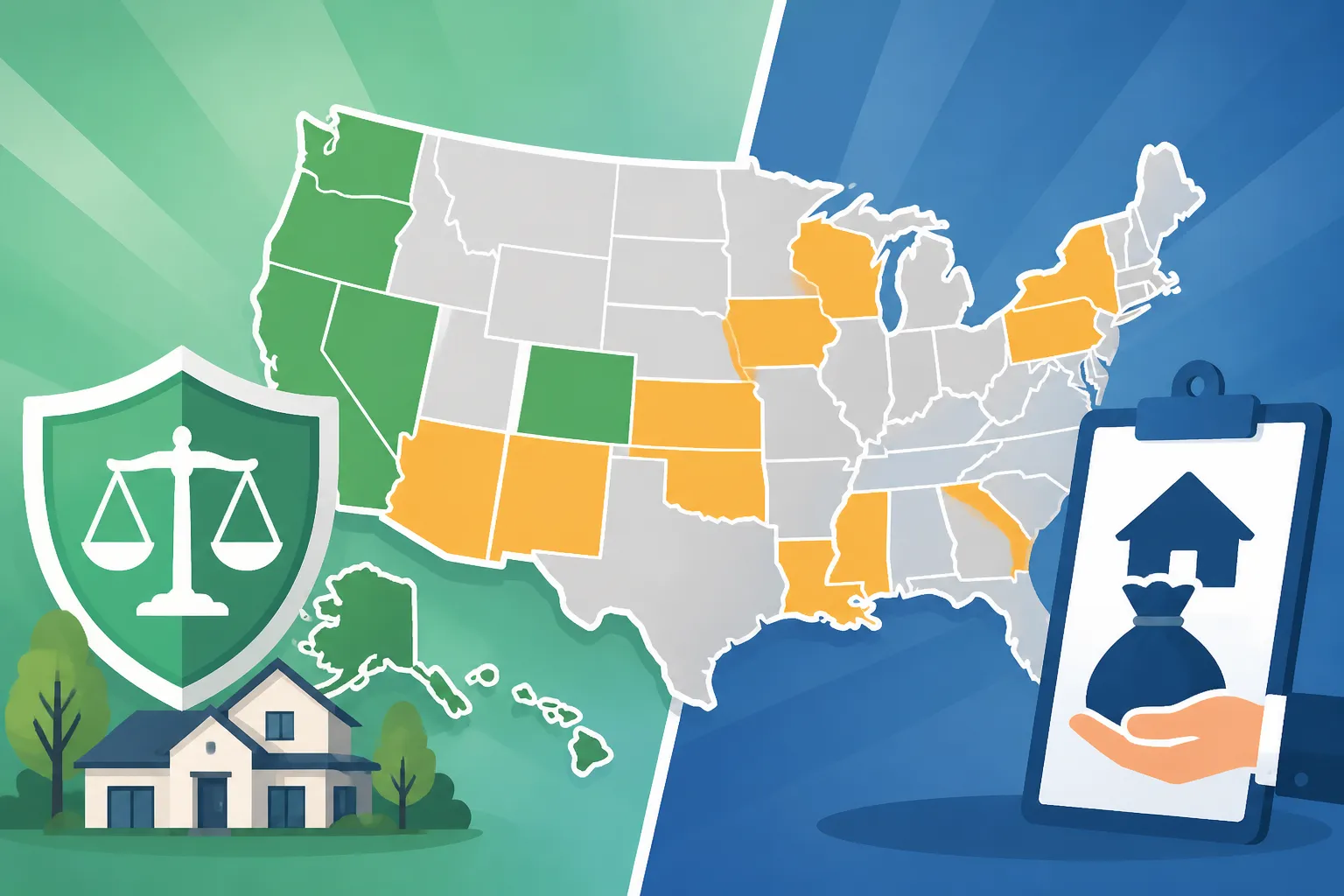
Which States Are Repealing or Changing Estate Tax?
State estate tax laws feel like a moving target, leaving many families wondering if their hard-earned legacy will be eaten away by "death taxes." This guide provides a comprehensive look at the states currently repealing, increasing exemptions, or debating major changes to their estate tax structures, helping you navigate these shifting legal landscapes and protect your family's financial future.
Why State Estate Taxes Are Currently in Flux
The landscape of state-level death taxes is shifting more rapidly than has been seen in decades. For a long time, many states simply "coupled" their laws to the federal government’s rules. However, as federal exemptions climbed to historic highs, many states realized they were losing significant revenue. This led to a period of "decoupling," where states set their own, much lower limits. Now, we are seeing a counter-trend where states are feeling the pressure to remain competitive as residents flee to tax-friendly jurisdictions like Florida or Texas.
The 2026 Federal Sunset and State Response
We are currently standing on the edge of a massive tax cliff. The Tax Cuts and Jobs Act (TCJA) nearly doubled the federal estate tax exemption, but those provisions are set to expire at the end of 2025. Unless Congress acts, the exemption will drop by about half in 2026. This creates a massive headache for state legislatures. Some states are proactively adjusting their laws to avoid a "stepped-down" exemption that would suddenly catch thousands of middle-class families in the tax net.
If you are currently looking at your balance sheet and worrying about what happens in eighteen months, you aren't alone. Many people use tools like SmartAsset to model how these federal shifts might impact their specific state liabilities. When the federal government changes its mind, states that are "coupled" to federal law see their tax base expand overnight, while others have to scramble to rewrite their own statutes to prevent an accidental tax hike on their residents. Understanding Which States Have an Estate Tax in 2026? is the first step in seeing where you might fall in this transition.
Economic Competition and Resident Outflow
There is a very real "tax migration" happening across the United States. High-net-worth individuals are increasingly mobile, and states with high estate taxes are watching their wealthiest residents pack up and move to "no-tax" states. This has put immense pressure on states like New Jersey (which repealed its estate tax recently) and Massachusetts to rethink their thresholds. Legislators are realizing that a 16% estate tax isn't worth much if the taxpayer moves their entire portfolio to a state with no tax two years before they pass away.
This competition is a win for you, the taxpayer. It means even "blue" states are beginning to raise their exemptions to keep people from leaving. However, it also creates a patchwork of rules that change year to year. You might spend years planning around a specific exemption, only to have the state legislature move the goalposts. This is why staying informed about States With No Estate Tax (2027) is so vital for long-term residency planning.
Recent Repeals and Phased Out Taxes
While it is rare for a tax to disappear entirely overnight, taxpayers have achieved some significant victories in the last few years. Several states have recognized that inheritance and estate taxes are often more trouble to administer than they are worth, especially when they drive away the very people who pay the most in property and income taxes throughout their lives.
Iowa's Inheritance Tax Repeal
One of the biggest stories in the tax world recently has been Iowa. For years, Iowa had a complex inheritance tax that frustrated families. However, the state passed legislation to phase this tax out entirely. By 2025, the Iowa inheritance tax will be a thing of the past. This is a massive relief for families in the Hawkeye State who were tired of seeing a portion of their parents' legacy go to the state capital instead of the grandkids.
The phase-out was gradual, which is a common tactic for states. They reduce the rate year by year until it hits zero. This allows the state budget to adjust to the lost revenue slowly. If you have family in the Midwest, understanding how Iowa Inheritance Tax Repealed (2025) works can provide a blueprint for what might happen in other neighboring states currently considering similar moves. It proves that with enough political will, these taxes can indeed be defeated.
The New Jersey Blueprint
New Jersey used to be one of the most expensive states in the country to die in because it had both an inheritance tax and an estate tax. In 2018, the state finally repealed its estate tax, though it curiously kept its inheritance tax for certain beneficiaries. This move was a direct response to the "tax flight" mentioned earlier. Thousands of retirees were moving to the Carolinas and Florida specifically to avoid the Garden State’s death taxes.
Even though the estate tax is gone in NJ, the inheritance tax still catches non-direct heirs. This serves as a warning: "repeal" doesn't always mean "zero taxes." You have to look at the fine print. If you are trying to understand the nuances between these two different types of levies, checking out the guide on Estate Tax vs Inheritance Tax: What's the Difference? is an absolute necessity to ensure you aren't caught off guard by a tax that survived the repeal.
States Raising Their Exemptions
Not every state is ready to kill their estate tax entirely, but many are realizing that a $1 million exemption is far too low in an era of high real estate values. If you bought a modest home in a good neighborhood thirty years ago, that house alone might be worth $800,000 today. Add in a 401(k) and some life insurance, and suddenly you are "wealthy" in the eyes of the state.
Massachusetts and the Move to 2 Million Dollars
For a long time, Massachusetts had one of the lowest estate tax exemptions in the country at just $1 million. It was famously "cliff-based," meaning if your estate was $1,000,001, you didn't just pay tax on that extra dollar—you paid tax on the whole thing. Thankfully, recent legislation has finally raised that threshold.
The new Massachusetts Estate Tax ($2 Million) exemption is a game-changer for middle-class families in the Bay State. It doubles the amount you can pass on tax-free and includes provisions to eliminate the "cliff" effect that used to penalize people for being even one dollar over the limit. This change was a direct result of residents complaining that their primary residences were pushing them into a tax bracket designed for millionaires. It’s a great example of how public pressure can force a state to modernize its tax code.
Connecticut and the Federal Match
Connecticut has taken a different approach that many taxpayers find refreshing: simplicity. For years, Connecticut had its own set of rules and lower exemptions. However, the state recently moved to align its exemption with the federal level. This means as the federal exemption rose to over $13 million, Connecticut’s followed suit.
This "coupling" makes planning much easier because you only have to keep one number in mind. However, it also means that when the federal sunset happens in 2026, Connecticut’s exemption will likely drop right along with it. If you live in the Constitution State, you need to be aware of the Connecticut Estate Tax (Matches Federal $15M) rules and how they might revert. Using a site like SmartAsset to stay updated on these specific thresholds is a smart move for anyone with a sizeable estate in New England.
States Considering New Changes or Repeals
As we look toward 2026 and beyond, several states are in the middle of heated legislative sessions where the future of the estate tax is on the line. These are the states to watch if you are considering moving or if you are in the middle of updating your trust documents.
The Oregon Debate
Oregon currently has one of the most aggressive estate taxes in the nation. With an exemption that starts at just $1 million, it catches many farmers, small business owners, and long-term homeowners. There has been a growing movement in Salem to either raise the exemption to $2.5 million or repeal the tax for family-owned businesses and farms.
The frustration in Oregon is palpable. Families who have owned timberland or farms for generations are often forced to sell portions of the land just to pay the tax bill when the patriarch or matriarch passes away. If you are in this boat, you should closely follow the Oregon Estate Tax ($1 Million Exemption) discussions. There is a lot of talk about reform, but as of now, the low threshold remains one of the tightest in the country.
Washington and Potential Rate Reform
Washington State has no income tax, which is great for residents while they are alive. However, the state makes up for some of that lost revenue with one of the highest estate tax rates in the country—topping out at 20%. Recently, there has been significant discussion regarding the Washington Estate Tax (35% to 20% Rate Change) and how it applies to various estate sizes.
While Washington hasn't moved to repeal the tax yet, they are under pressure from neighbors like Idaho and Wyoming, which have no death taxes at all. There is a constant push-pull in the Washington legislature between those who want to use the tax to fund social programs and those who realize it’s driving the "tech wealth" out of the state and into tax havens.
Minnesota and the 3 Year Add Back Rule
Minnesota is another state where the estate tax is a hot-button issue. One of the most frustrating parts of their law is the "three-year gift add-back." Essentially, if you give away money to try to reduce your estate tax and then pass away within three years, Minnesota "claws back" those gifts and taxes them anyway.
There is ongoing pressure to reform the Minnesota Estate Tax (3-Year Gift Add-Back) because it makes end-of-life planning incredibly stressful for families. No one wants to spend their final years worrying that their gifts to their children will be penalized if they don't live long enough. Legislators are currently looking at whether this rule is doing more harm than good by encouraging seniors to move out of the state earlier in their retirement.
Comparison of Recent and Upcoming State Tax Changes
To help you keep track of where things are heading, I’ve put together a table showing the current status of some of the most "active" states in the estate tax conversation.
| State | Current Status | Recent or Pending Change | Effective Date |
|---|---|---|---|
| Iowa | Phasing Out | Full repeal of Inheritance Tax | January 1, 2025 |
| Massachusetts | Active | Raised exemption from $1M to $2M | Retroactive to 2023 |
| Connecticut | Active | Aligned with Federal Exemption | Ongoing (2023-2026) |
| New York | Active | Strict "Cliff" remains; no major repeal planned | N/A |
| Oregon | Active | Legislative push to raise $1M limit | Under Debate |
| Washington | Active | Discussions on rate reductions | 2025-2026 Sessions |
| Maryland | Active | Only state with both Estate & Inheritance tax | No repeal in sight |
Strategic Planning in a Changing Environment
When the laws are shifting beneath your feet, the best defense is a proactive offense. You cannot assume that the rules in place today will be the rules in place when your executor has to file your final returns. This is especially true if you live in a state like New York, where The Estate Tax Cliff Explained (New York & More) can result in a tax bill that is actually higher than the amount you went over the exemption.
The Power of Gifting
One of the most effective ways to combat a state estate tax—especially if you live in a state that is considering a repeal but hasn't done it yet—is through strategic gifting. By moving assets out of your name now, you reduce the size of the "taxable estate" the state can see. However, you have to be careful about those "add-back" rules mentioned earlier in states like Minnesota.
If you’re unsure how much you can give away without triggering federal issues, consulting a resource like SmartAsset can help you balance your state-level goals with federal gift tax limits. Often, the best way to How to Reduce or Avoid State Estate Tax is to simply not own the assets in your own name by the time you pass away. This can be done through direct gifts or more complex structures.
Utilizing Irrevocable Trusts
For those with larger estates, waiting for a state to repeal its tax might be a losing game. Instead, many are turning to irrevocable trusts. These legal entities "own" the assets, meaning they aren't part of your estate when you die. It’s a way to effectively "repeal" the tax for yourself, regardless of what the state legislature decides to do.
Setting up a trust requires an upfront cost, but when compared to a 16% tax on a multi-million dollar estate, the math usually favors the trust. If you are looking for ways to protect your home or business, looking into How State Estate Tax Works and how trusts can bypass those rules is the smartest move you can make. It gives you a level of certainty that the government can't take away with a single vote in the state capital.
How to Stay Informed as 2026 Approaches
The next two years will likely see a flurry of activity in state capitals across the country. As the federal "sunset" draws closer, states will be forced to decide if they want to let their exemptions fall or if they want to step in and protect their residents.
If you're feeling overwhelmed, don't worry—most people are. The best thing you can do is keep a close eye on your specific state's revenue department or use a financial dashboard like SmartAsset to track legislative changes. You should also revisit your estate plan at least once a year. A plan that worked in 2022 might be completely obsolete by 2026. Understanding the State Estate Tax Exemptions & Rates Compared 2026 will be the ultimate checklist for anyone trying to preserve their family's wealth in this new era of taxation.
Disclaimer
This guide is for informational purposes only and does not constitute legal, financial, or tax advice. Estate tax laws are subject to frequent change at both the state and federal levels. You should consult with a qualified tax professional or estate attorney to discuss your specific situation and ensure compliance with current regulations.