What Is the Estate Tax Cliff?
It’s a truly frustrating scenario: you’ve worked hard your entire life, built up a nest egg, and you’re trying to plan for your loved ones’ futures, only to discover a complex tax rule that could drastically increase your state estate tax burden if your assets just barely exceed a certain threshold. This often-misunderstood phenomenon is known as the "estate tax cliff," and it can turn what seems like a minor overage into a major financial headache for your heirs. This guide will walk you through exactly what the estate tax cliff is, which states have it, and practical strategies to avoid falling victim to its steep penalties.
Understanding the Estate Tax Cliff
The estate tax cliff, sometimes referred to as a "tax trap" or "notch," is a peculiar feature in certain state estate tax laws where estates exceeding the exemption amount by even a small margin become fully taxable from dollar one, rather than just taxing the amount over the exemption. Instead of a gradual increase in tax, it’s like stepping off a literal cliff – the entire estate, or a significant portion of it, suddenly becomes subject to tax, leading to a much higher bill than many people anticipate. This differs significantly from how federal estate tax works, and even how many state estate taxes operate.
How the Cliff Works in Practice
Imagine your state has an estate tax exemption of $5 million. In a typical tax system, if your taxable estate is $5.1 million, you’d only pay tax on the $100,000 that exceeds the exemption. However, with an estate tax cliff, if your estate hits that $5.1 million mark, the entire $5.1 million might become subject to tax. This means instead of paying tax on a mere $100,000, your heirs could be on the hook for tax on the full $5.1 million, often at a progressive rate. The financial impact can be staggering, effectively making a slightly larger estate pay significantly more in taxes than an estate just under the threshold. It's a system designed to disincentivize skirting the exemption, but it often catches people off guard who aren't familiar with its intricacies.
The "Recapture" Mechanism
In states that implement an estate tax cliff, the mechanism often involves a "recapture" provision. Once an estate's value surpasses the exemption threshold, the tax formula essentially "recaptures" the benefit of the exemption that was previously available. For instance, in a state like New York, the tax calculation involves taxing the entire adjusted gross estate if it exceeds the exemption amount by a certain percentage, often 5%. If the estate is valued above the exemption but below the "cliff" threshold (exemption + 5%), the tax is calculated on the full amount, minus a specific credit. However, once it crosses that 5% overage, the credit completely disappears, and the tax is levied on the entire estate without any exemption benefit. This sudden loss of the exemption is what creates the steep "cliff" effect, dramatically increasing the tax liability for estates that are only marginally larger.
States That Feature an Estate Tax Cliff
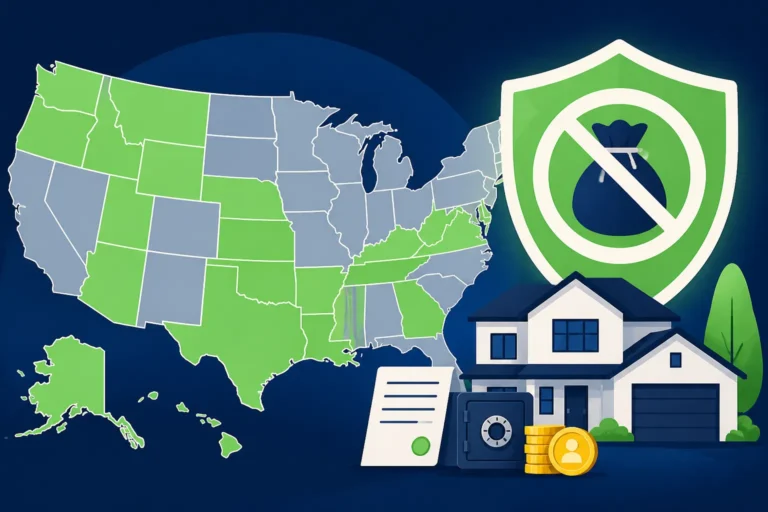
While the federal estate tax exemption is quite generous, at $13.61 million per individual for 2024 and $15 million in 2026, many states have their own estate taxes with much lower exemption thresholds. And critically, a handful of these states incorporate an estate tax cliff into their tax structure. This means residents of these states need to be particularly vigilant in their estate planning.
Identifying the "Cliff" States
Currently, New York and Washington D.C. are well-known for their estate tax cliff provisions. New York's estate tax exemption is set to be around $6.94 million in 2024 (indexed for inflation), but if your estate exceeds this amount by more than 5%, you lose the entire exemption and the full estate becomes taxable. The District of Columbia has a similar structure, where exceeding its exemption threshold (which is $4 million for 2024) by a certain amount can trigger a full tax on the entire estate. This is a crucial detail for anyone living in or owning significant property in these jurisdictions. Understanding Which States Have an Estate Tax in 2026? is the first step, and then delving into the specifics of each state's rules, like those for New York Estate Tax Cliff Explained, is paramount.
New York's Notorious Estate Tax Cliff
New York's estate tax cliff is arguably the most talked-about due to its significant impact on even moderately wealthy individuals. For estates of New York residents, the exemption amount is adjusted annually for inflation. For deaths occurring in 2024, if the adjusted gross estate is between 100% and 105% of the basic exclusion amount, the estate tax is calculated as if the basic exclusion amount did not apply. In simpler terms, if your estate is valued even slightly above the exemption, but still within 105% of it, you effectively lose the entire exemption. This "clawback" of the exemption can lead to a substantial tax bill that catches many families by surprise. For example, if the exemption is $6.94 million, and your estate is $7 million, you've exceeded it by less than 5%, meaning the entire $7 million is taxable. This is a stark contrast to a system where only the $60,000 difference would be taxed. Financial platforms like SmartAsset often highlight these state-specific nuances to help people understand their potential liabilities.
The Financial Impact of the Estate Tax Cliff
The financial repercussions of hitting the estate tax cliff can be severe and can significantly reduce the wealth passed on to your beneficiaries. It's not just about paying a little more tax; it's about losing the entire benefit of the exemption you thought you had. This can mean millions more in taxes, depending on the size of your estate and the specific state's tax rates.
Calculating the "Cliff" Penalty
Let's use a hypothetical example with New York's 2024 exemption (approximately $6.94 million). If an estate is valued at $6.9 million, it owes no state estate tax. But if the estate's value is $7 million (just $60,000 over the exemption), it falls into the "cliff" zone. Instead of taxing only the $60,000 overage, the entire $7 million becomes taxable. New York's estate tax rates range from 3.06% to 16%. On a $7 million estate, this could mean an estate tax bill of hundreds of thousands of dollars, or even more, that would have been entirely avoided if the estate had been just $100,000 smaller. This phenomenon makes it incredibly important to understand How Estate Tax Is Calculated in these states. You can use online tools or calculators, like those offered by SmartAsset, to estimate these potential tax liabilities more accurately based on current exemptions and rates.
Here's a simplified look at how the cliff can impact an estate in a hypothetical state with a $5 million exemption and a 10% tax rate, where the cliff triggers if the estate exceeds the exemption by any amount:
| Estate Value | Exceeds Exemption by | Taxable Amount (No Cliff) | Taxable Amount (With Cliff) | Estimated Tax (No Cliff) | Estimated Tax (With Cliff) | Difference |
|---|---|---|---|---|---|---|
| $4,999,000 | N/A | $0 | $0 | $0 | $0 | $0 |
| $5,000,000 | N/A | $0 | $0 | $0 | $0 | $0 |
| $5,001,000 | $1,000 | $1,000 | $5,001,000 | $100 | $500,100 | $500,000 |
| $5,100,000 | $100,000 | $100,000 | $5,100,000 | $10,000 | $510,000 | $500,000 |
Note: This table uses a simplified 10% flat tax rate for illustrative purposes. Actual state estate tax rates are often progressive and more complex.
As you can see, the difference in tax liability can be substantial, often equaling the tax that would have been due on the entire exemption amount. This highlights why proactive planning is not just beneficial, but absolutely critical for residents in cliff states.
Psychological and Planning Challenges
Beyond the direct financial hit, the estate tax cliff creates significant psychological stress for individuals and families engaged in estate planning. It means that precise valuation of What Is the Gross Estate? becomes even more critical, as being off by a few thousand dollars could trigger a massive increase in taxes. This requires careful consideration of all assets, including Does My House Count Toward State Estate Tax? and other significant holdings. Planners need to be acutely aware of every asset's value and potential growth. It also makes last-minute planning incredibly difficult, as complex strategies are often needed to subtly reduce the estate's value below the cliff threshold. The fear of miscalculation can lead to anxiety and over-planning, underscoring the need for expert guidance.
Strategies to Navigate or Avoid the Estate Tax Cliff
Facing an estate tax cliff can feel daunting, but thankfully, there are proactive strategies you can employ to potentially reduce your taxable estate and avoid falling into this costly trap. The key is to plan well in advance and to understand all your options.
Strategic Gifting
One of the most effective ways to reduce your taxable estate and stay below the cliff threshold is through strategic gifting. Each year, you can gift a certain amount to any individual without incurring gift tax or using up your lifetime gift tax exemption. For 2024, this annual gift tax exclusion is $18,000, and it's projected to be $19,000 in 2026. A married couple can effectively give $36,000 (or $38,000 in 2026) to each recipient. If you have multiple children and grandchildren, these gifts can add up quickly over several years, significantly reducing the size of your estate. Remember, these annual exclusion gifts do not count against your lifetime federal gift and estate tax exemption, which is a powerful tool. Moreover, direct payments for medical expenses or tuition, if paid directly to the institution, are also generally exempt from gift tax and don't count against your annual exclusion. Planning to ensure Does Gifting Reduce State Estate Tax? is a successful strategy involves consistent, thoughtful execution.
Utilizing Trusts for Asset Protection
Trusts are a cornerstone of advanced estate planning and can be particularly useful in navigating state estate tax cliffs. By transferring assets into certain types of irrevocable trusts, you can remove those assets from your taxable estate. For instance, an Irrevocable Life Insurance Trust (ILIT) can hold a life insurance policy, keeping the death benefit out of your estate, thus potentially helping you stay below the cliff threshold. Other trusts, such as a Qualified Personal Residence Trust (QPRT) for your home or a Grantor Retained Annuity Trust (GRAT) for appreciating assets, can also be used to transfer wealth to heirs with minimal or no gift tax consequences, further shrinking your taxable estate. Understanding How to Avoid Estate Tax With Trusts and knowing the nuances of Does a Trust Avoid State Estate Tax? are vital. Platforms like SmartAsset can help connect you with advisors who specialize in these complex trust structures.
Leveraging the Marital Deduction
For married couples, the unlimited marital deduction is a powerful tool to defer or even eliminate estate taxes upon the death of the first spouse. Assets passed to a surviving spouse, if that spouse is a U.S. citizen, are generally exempt from both federal and state estate taxes. This allows the first spouse to die to leave their entire estate to their surviving spouse without triggering an estate tax liability at that time. This can be particularly useful in "cliff" states to ensure that the estate of the first spouse doesn't inadvertently trigger the cliff, giving the surviving spouse more time to plan. However, the marital deduction typically only defers the tax, meaning the assets will be included in the surviving spouse's estate, potentially subject to the cliff later. Therefore, careful planning for the second death is still essential, which might involve strategies like establishing a Bypass Trust or Credit Shelter Trust. Further reading on Marital Deduction & Estate Tax can provide more depth on this strategy.
Seeking Professional Guidance
Given the complexity of state estate tax laws and the severe consequences of the estate tax cliff, seeking advice from an experienced estate planning attorney or a qualified financial advisor is highly recommended. These professionals can help you accurately value your assets, understand the specific rules of your state, and design a tailored estate plan that utilizes trusts, gifting strategies, and other tools to minimize your tax exposure. They can also help you understand how to avoid the How to Avoid the New York Estate Tax Cliff specifically. Relying on generic advice or attempting to navigate these waters alone can lead to costly mistakes. Financial experts often provide personalized calculations and strategies to ensure your estate plan is robust and effective.
Disclaimer
This article is for general informational purposes only and does not constitute professional advice. Laws and regulations vary by location and change over time. Consult a qualified professional for guidance on your specific situation.