States With No Estate Tax (2027)
You’ve spent decades building a life, saving every penny, and making sure your kids have a better start than you did, only to realize that where you choose to park your moving truck could cost your family millions. This guide breaks down exactly which states have no estate tax in 2026, helping you protect your hard-earned legacy from unnecessary government reach.
Understanding the Landscape of Estate Taxes
This is a massive milestone for anyone tracking their net worth. For years, we’ve lived under the generous umbrella of the Tax Cuts and Jobs Act (TCJA), which boosted the amount of money you could pass down to your heirs without the federal government taking a cut. But as we move into 2026, those federal rules are shifting, and it has sent a ripple effect through state legislatures across the country. Many people are surprised to learn that even if they don't owe the IRS a dime, their home state might still be waiting with its hand out.
When we talk about the "death tax," we are usually talking about a two-headed monster: the federal estate tax and the state-level estate tax. While the federal government has a very high bar for who actually pays, states are much more aggressive. Some states start taxing your estate at just $1 million. If you own a modest home in a high-cost area and have a decent 401(k), you are likely over that threshold before you even count your life insurance or personal belongings. This is why choosing a state with no estate tax has become a primary pillar of modern retirement planning.
Tools like SmartAsset can help run the numbers, since the math changes quickly when property taxes and cost of living are factored in. However, the core of the issue remains: if you live in a state that taxes your estate, your heirs are essentially paying a "success penalty" for you having worked hard and stayed in that location. In 2026, the list of states that refuse to levy this tax is your primary roadmap for wealth preservation.
The Federal Sunset Impact
As we navigate through 2026, the Federal Estate Tax Exemption 2026 ($15 Million) remains a critical figure to watch. While this federal limit is high, it is established at $15,000,000 for 2026 and indexed annually for inflation starting in 2027. This means that more families than ever will be caught in the tax net. When the federal exemption drops, the pressure on state-level planning intensifies. If you live in a state that doesn't have its own estate tax, you only have to worry about one hurdle. If you live in a state that does, you're fighting a war on two fronts.
Imagine a scenario where a family in Oregon—a state known for its aggressive tax—leaves behind a $3 million estate. Even if they are well under the federal limit, Oregon’s low threshold means the state will take a significant chunk. Contrast this with a family in Florida with the exact same estate. The Florida family pays zero in state estate taxes. That is a life-changing amount of money for the next generation, potentially covering college tuitions or starting a new family business.
Decoupling and State Specifics
To really get why some states tax you and others don't, you have to understand "decoupling." Years ago, most states had an estate tax that was tied directly to the federal system. When the federal government changed its rules, the states automatically followed. Eventually, many states decided to "decouple" and set their own rules, rates, and exemptions. This created the fragmented map we see today.
This fragmentation is why you’ll see some states desperately trying to attract wealthy retirees by keeping taxes low, while others use estate taxes to fund local infrastructure and social programs. Some families move across state lines just to ensure their farm or family business stays intact. It’s a drastic move, but when you look at the State vs Federal Estate Tax: How They Stack comparison, the logic becomes clear.
The Full List of States With No Estate Tax in 2026
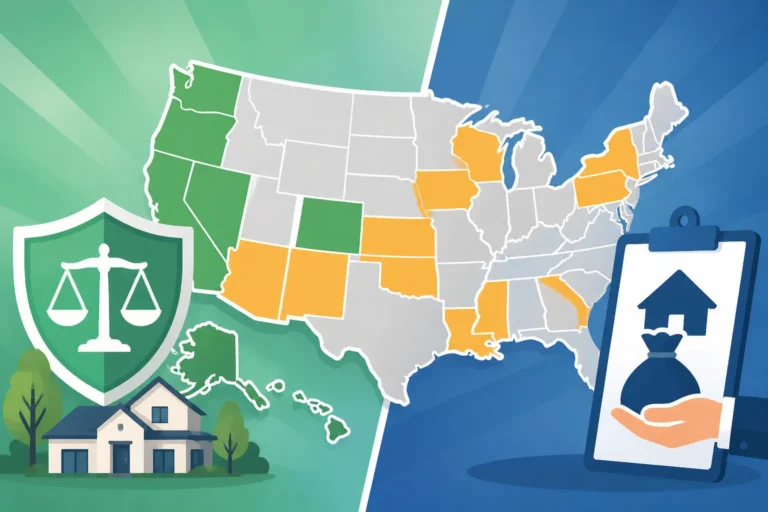
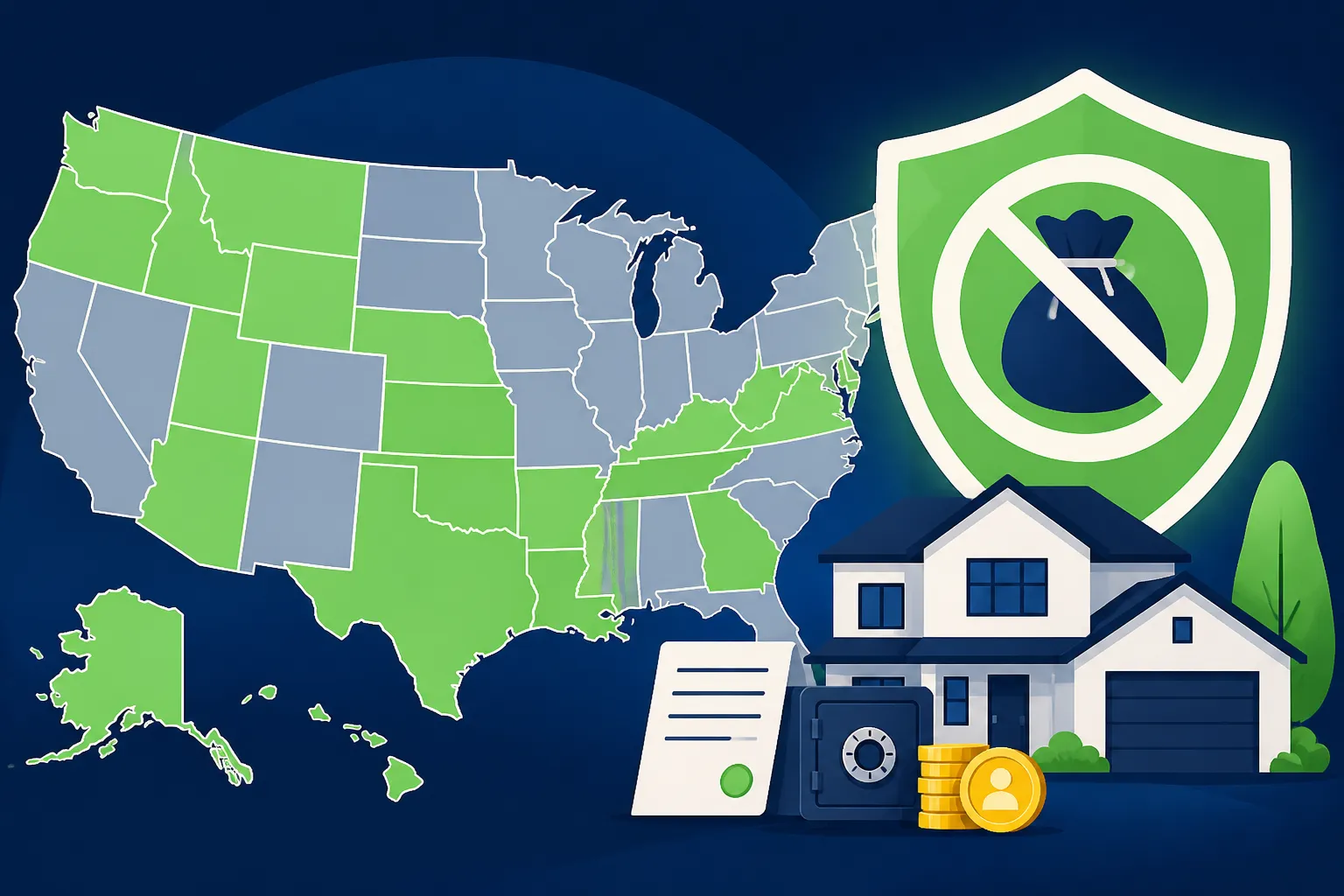
The good news for most Americans is that the majority of states do not have an estate tax. As of 2026, 38 states and the District of Columbia (which has its own unique rules) fall into different categories, but most offer a reprieve from this specific tax. Living in one of these states means that your estate will only be subject to federal rules, which, for the vast majority of people, means paying no estate tax at all.
However, you have to be careful. Just because a state doesn't have an estate tax doesn't mean it doesn't have an inheritance tax. This is a common trap that even savvy investors fall into. An estate tax is taken out of the pot before the money is distributed, whereas an inheritance tax is paid by the person receiving the money. If you are looking for a completely tax-friendly exit, you want a state that has neither.
Popular Retirement Havens
Florida remains the undisputed king of retirement destinations for a reason. When people ask, Does Florida Have an Estate Tax?, the answer is a resounding no. This, combined with no state income tax, makes it a magnet for high-net-worth individuals. Texas follows a similar philosophy. If you look into Does Texas Have an Estate Tax?, you’ll find that the Lone Star State is equally protective of your legacy.
Arizona has also emerged as a massive player in the retirement game. By ensuring that the answer to Does Arizona Have an Estate Tax? remains "no," the state has attracted a huge population of "snowbirds" who eventually decide to make the desert their permanent home. These states understand that the economic benefit of having wealthy residents spend their money in the local economy far outweighs the one-time tax revenue collected at death.
The South and the Midwest
The southern United States is generally very friendly to estates. For instance, when looking at the Southeast, many ask, Does Georgia Have an Estate Tax?, and they are relieved to find it was repealed years ago. The same goes for the Carolinas. If you’re checking if Does North Carolina Have an Estate Tax?, you’ll find a state that has worked hard to remain competitive with its neighbors by keeping estate taxes off the books.
The Midwest is a bit more of a mixed bag, but large states like Ohio, Michigan, and Indiana do not have an estate tax. This is a huge relief for farmers and small business owners in those regions. I frequently suggest people check SmartAsset's regional calculators to see how these lack of taxes balance out against higher local property taxes, as that is often where the "missing" revenue is made up.
| State | Estate Tax? | Inheritance Tax? | 2026 Status |
|---|---|---|---|
| Alabama | No | No | Tax-Friendly |
| Arizona | No | No | Tax-Friendly |
| California | No | No | Tax-Friendly (Estate Only) |
| Florida | No | No | Tax-Friendly |
| Georgia | No | No | Tax-Friendly |
| Nevada | No | No | Tax-Friendly |
| Texas | No | No | Tax-Friendly |
| Pennsylvania | No | Yes | Mixed |
| New Jersey | No | Yes | Mixed |
| Maryland | Yes | Yes | High Tax |
Why Do Some States Have an Estate Tax While Others Don’t?
The divide between "tax states" and "no-tax states" usually comes down to a fundamental disagreement about economic growth. States like Florida and Nevada operate on the theory that if you don't tax wealth at death, people will bring their wealth to the state while they are alive. They buy houses, eat at restaurants, hire local contractors, and pay sales and property taxes. This creates a vibrant, growing economy that generates consistent revenue.
On the other side of the fence, states like Oregon and Washington argue that the estate tax is a necessary tool for wealth redistribution and funding essential services. They view it as a way to ensure that the wealthiest members of society contribute to the infrastructure that helped them build that wealth in the first place. This philosophical divide is why we see such a stark contrast in the State Estate Tax Exemptions & Rates Compared 2026 data.
Revenue Generation vs. Wealth Migration
The problem for states with high estate taxes is "wealth migration." It is incredibly easy for a retiree to change their legal residence. If you own a home in New York and a condo in Florida, and you realize New York is going to take 10% of your estate, you are going to do everything in your power to make Florida your primary domicile. This leads to a "brain drain" and a "capital drain" that many states are currently struggling with.
We are seeing a trend where states are realizing this. You can look at the data on Which States Are Repealing or Changing Estate Tax? to see how legislatures are slowly caving to the pressure of losing their wealthiest citizens. Even states that haven't fully repealed the tax are starting to raise their exemption limits to match the federal levels, hoping to keep people from packing their bags.
Legislative Trends
The legislative trend is leaning toward competition. States are essentially in a bidding war for your residency. This is why it’s so important to keep an eye on the news. A state that was tax-heavy five years ago might be in the middle of a phase-out right now. For example, some states have "sunset" clauses for their own taxes, or they index their exemptions to inflation to prevent "bracket creep," where inflation pushes middle-class families into a tax meant for the ultra-wealthy.
Families are often caught off guard because they rely on old information. They remember their parents talking about the "death tax" in a certain state and assume it’s still there. But the landscape is shifting. Always verify the current year's rules, as the 2026 changes are particularly impactful.
Estate Tax vs. Inheritance Tax: Why the Distinction Matters
This is where the conversation usually gets confusing at dinner parties. Most people use the terms "estate tax" and "inheritance tax" interchangeably, but they are very different beasts. Think of the estate tax as a tax on the "giving." The government takes its cut before anyone gets a check. Think of the inheritance tax as a tax on the "receiving." The heirs get their money, and then they have to pay the state a portion of it.
If you live in a state with no estate tax, you might still be in for a surprise if that state has an inheritance tax. For example, Pennsylvania does not have an estate tax, but it has one of the most well-known inheritance taxes in the country. This means that even though the estate itself isn't taxed, the children or siblings receiving the money will be. This nuance is why people spend so much time researching Which States Have an Inheritance Tax?.
The Payer Difference
The identity of the payer changes everything for your estate planning. If the estate pays the tax, your executor handles it using the funds in your accounts before distributing what's left. If the heir pays the tax, they are the ones responsible for filing the return and cutting the check. This can be a huge burden for an heir who might have inherited a house but doesn't have the liquid cash to pay the tax on it.
Understanding Estate Tax vs Inheritance Tax: What's the Difference? is the first step in protecting your family from administrative nightmares. In states with inheritance taxes, the rate often depends on how closely related the heir is to the deceased. Spouses usually pay nothing, while distant relatives or friends pay the highest rates.
The Double Whammy States
There is one state that currently holds the title for the most aggressive tax regime: Maryland. As of 2026, Maryland is the only state that imposes both an estate tax and an inheritance tax. It’s the "double whammy" that estate planners warn their clients about. If you are a resident there, you have to plan for two different sets of rules and two different tax bites.
The Maryland: The Only State With Both Estate & Inheritance Tax profiles serve as a clear warning for high-net-worth individuals. Unless you have a very strong reason to stay, the math almost always suggests moving or utilizing complex trusts to shield your assets. It’s the perfect example of why geographic location is one of the most important factors in your financial legacy.
Planning Your Move to a No-Estate-Tax State
So, you’ve decided the tax bill isn't worth it and you want to move. It sounds simple: buy a house in a no-tax state, move your boxes, and say goodbye to the tax collector. But states that rely on estate tax revenue don't let go easily. They have "residency audits" that are surprisingly thorough. If you say you moved to Florida but you still spend six months a year in your old house in New Jersey, the state of New Jersey might still claim you are a resident for tax purposes.
To successfully navigate Estate Tax When Moving to a No-Tax State, you have to do more than just change your address. You have to change your "domicile." Domicile is the place you intend to return to whenever you are away. It’s where you vote, where your car is registered, where your primary doctor is located, and where you keep your "near and dear" items—like family photos and heirlooms.
Proving Your New Domicile
Tax auditors often look at what they call the "Teddy Bear Test." Where are the things you truly love? If you have a massive mansion in a tax state and a tiny condo in a no-tax state, they will argue your heart is still in the mansion. You need to create a paper trail that proves your move was permanent. This includes updating your driver's license, registering to vote, and even changing your social club memberships.
I’ve seen families get hit with massive tax bills because they forgot to change the address on their life insurance policy or their bank statements. States will use any evidence to prove you haven't actually left. It’s a meticulous process, but when you look at how much you can save, it’s well worth the effort. SmartAsset offers checklists for changing residency that are extremely helpful for these "boring" but vital tasks.
Selling Property in Tax-Heavy States
One of the biggest hurdles to moving is what to do with your existing home. If you keep your house in a state with an estate tax, that property is still "situs" in that state. This means that even if you are a legal resident of Florida, the state where the house is located can still tax the value of that house when you pass away.
This is a shock to many people. They think moving their residency protects everything, but real estate is tied to the land. If you want to completely avoid a state’s reach, you often have to sell the property or move it into a specific type of entity. This is why Selling an Inherited House: Taxes Explained is such a popular topic; the tax implications of real estate are some of the stickiest parts of estate law.
How Federal Estate Tax Still Impacts You in No-Tax States
Don't let the lack of a state tax lull you into a false sense of security. The federal government is always there, and its rules are much broader. In 2026, even if you live in a zero-tax state like Nevada or Florida, you still have to contend with the federal threshold. If your estate is large enough, the IRS will take 40% of everything above the exemption limit.
This is where the Federal Estate Tax Exemption 2026 ($15 Million) comes back into play. While $15 million sounds like a lot, it is a combined limit for both your lifetime gifts and your estate at death. If you gave away large sums of money during your life to help your kids buy houses or start businesses, that "unified credit" is already partially used up.
The Unified Credit and Gifting
The federal system uses what’s called a "unified credit." This means the government tracks every dollar you give away over the annual exclusion limit (which is $19,000 per person in 2026). If you give your son $50,000 for a down payment, $31,000 of that counts against your lifetime exemption. By the time you pass away, your remaining tax-free "bucket" might be smaller than you think.
Checking the Lifetime Gift & Estate Tax Exemption (Unified Credit) regularly is essential. If you live in a no-tax state, your goal is to stay under this federal limit. If you go over, the tax rate is a flat 40%, which is significantly higher than any state-level tax. It’s the ultimate "success tax," and it requires aggressive planning to avoid.
Portability: The Married Couple’s Secret Weapon
For married couples, there is a fantastic rule called "portability." This allows a surviving spouse to use the unused portion of their deceased spouse’s federal exemption. Effectively, this means a couple can pass down up to $30 million tax-free in 2026. However, there is a catch: you have to file a federal estate tax return (Form 706) when the first spouse dies to "claim" that portability, even if no tax is owed.
Interestingly, Estate Tax Portability and Why Most States Don't Offer It is a point of frustration for many. Most states with their own estate taxes do not allow portability. If you live in a tax-heavy state, you often have to use "Bypass Trusts" or "Credit Shelter Trusts" to make sure both spouses' exemptions are used. In a no-tax state, this planning is much simpler because you are only dealing with the federal rules that do allow portability.
Strategies to Minimize Estate Tax Even if You Live in a Tax State
If you love your home and refuse to move, but you live in a state with an estate tax, all is not lost. There are legal and effective ways to shrink the size of your taxable estate so that it falls below the state’s threshold. The most common method is "gifting." By giving your money away while you are alive, you are removing it from the pot that the state gets to tax when you die.
However, you have to be careful with the timing. Some states, like Minnesota, have a "three-year add-back" rule. If you give away a million dollars and die two years later, the state will pretend you still have that money and tax it anyway. They want to prevent "deathbed gifting" where people try to dodge the tax at the last minute.
Using Annual Gifting
The simplest way to reduce your estate is to use the annual gift tax exclusion. As mentioned, in 2026, you can give $19,000 to as many people as you want without even having to report it to the IRS. If you have three children and six grandchildren, you and your spouse could collectively give away $342,000 per year. Over ten years, that’s $3.4 million removed from your taxable estate, completely legally and with no paperwork.
This strategy is often overlooked because people worry about "giving away their lunch money." But if you have more than you need, Does Gifting Reduce State Estate Tax? is a question with a very profitable answer. It’s a way to watch your heirs enjoy their inheritance while you’re still around to see it, which is far more rewarding than letting the state take it later.
The Role of Living Trusts
Trusts are the heavy hitters of estate planning. A Revocable Living Trust is great for avoiding probate, but it doesn't actually save you on estate taxes because you still control the money. To save on taxes, you usually have to look at Irrevocable Trusts. These are entities where you give up control of the assets in exchange for removing them from your taxable estate.
When people ask How Do Trusts Avoid Estate Tax?, they are usually looking at things like Irrevocable Life Insurance Trusts (ILITs) or Grantor Retained Annuity Trusts (GRATs). These are complex tools, but they are the reason why very wealthy families seem to pay so little in tax. They effectively "freeze" the value of their assets or move the growth of those assets outside of their own names.
How to Calculate Your Potential Exposure
Before you make any big moves, you need to know exactly what you’re dealing with. Calculating your "gross estate" is more than just checking your bank balance. It includes your home’s fair market value, the face value of your life insurance policies (a common surprise!), your retirement accounts, your cars, your jewelry, and even any debt that is owed to you.
Many people find that they are "accidentally wealthy" in the eyes of the state. If you bought a house in Seattle or Boston thirty years ago for $200,000 and it’s now worth $1.8 million, you are already approaching or exceeding the estate tax limits in those states. This "equity wealth" is just as taxable as cash in the bank.
Using Online Calculators
I highly recommend using tools like those found on SmartAsset to run "what-if" scenarios. What if you stay in your current state? What if you move? What if you put your house in a trust? Seeing the numbers in black and white often provides the motivation needed to start the planning process. Most people realize that a few hours of planning can save their children hundreds of thousands of dollars.
Remember that How to Avoid Estate Tax Legally is not about tax evasion; it’s about tax avoidance. The law provides these exemptions and rules for a reason. Taking advantage of them is just smart financial management. It’s no different than taking a deduction for mortgage interest or putting money into a 401(k) to lower your income tax.
Final Thoughts on Wealth Preservation
The state of your estate is largely a matter of geography. If you are fortunate enough to live in one of the 38 states with no estate tax, you have a much simpler path forward. You can focus on federal planning and ensuring your assets are distributed exactly how you want them. You don't have to worry about the "death tax" at the state level, and you can enjoy your retirement with one less hand in your pocket.
However, if you are in a tax-heavy state, don't panic. You have options. Whether it’s moving, gifting, or using sophisticated trusts, you can protect what you’ve built. The key is to start early. Estate planning is not a "once and done" task; it’s a living strategy that needs to be updated as laws change and your family grows. By staying informed and proactive, you can ensure that your legacy serves your loved ones, not the government.
Disclaimer
This guide is for informational purposes only and does not constitute legal, financial, or tax advice. Estate tax laws are subject to frequent change at both the federal and state levels. You should consult with a qualified estate planning attorney or tax professional to discuss your specific situation and ensure compliance with all current regulations in your jurisdiction. The 2026 thresholds and rates mentioned are based on current projections and legislative schedules which may be altered by future government action.