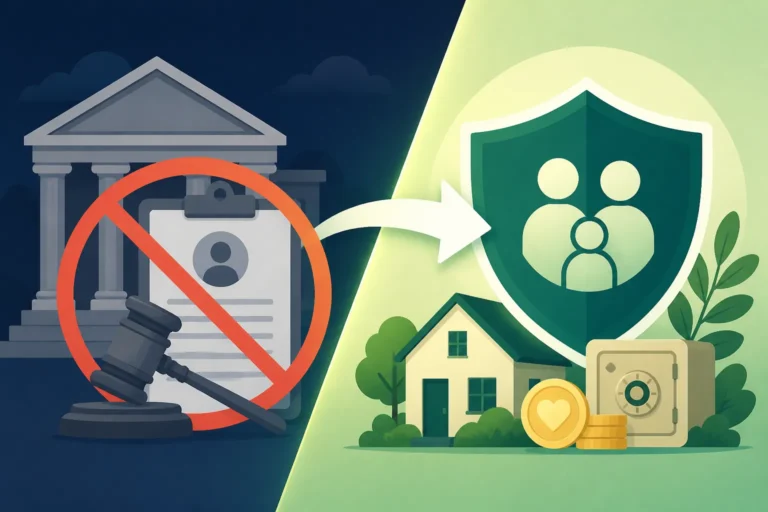
Probate Process & Cost in Alaska
Dealing with the aftermath of a loved one's passing is already incredibly challenging, and the last thing anyone wants is to be bogged down by a complex and costly legal process. Many Alaskans find themselves overwhelmed by the mysteries of probate, wondering how much it will cost, how long it will take, and if there's any way to simplify it. This comprehensive guide aims to demystify the probate process and its associated costs here in Alaska, offering clear insights and practical strategies to help you navigate this difficult time.
Understanding Probate in Alaska
When someone passes away, their assets often need to go through a legal process called probate. It’s essentially the court-supervised way of validating a will, settling any outstanding debts, and distributing the deceased person's property to their rightful heirs or beneficiaries. While it might sound intimidating, understanding the basics of probate in Alaska can help ease some of the worry.
What Exactly is Probate and Why Does it Happen in the Last Frontier?
At its heart, probate is the legal mechanism to ensure that a deceased person's wishes regarding their estate are honored, or, if there's no will, that their assets are distributed according to state law. In a state as vast and unique as Alaska, this process serves to bring clarity and legal closure to a person's financial affairs after their death. Without probate, there would be no clear, legally recognized way to transfer ownership of assets like real estate, vehicles, or bank accounts solely held in the deceased's name.
Imagine your beloved Aunt Sarah, who lived in Anchorage her whole life and owned a charming cabin on the Kenai Peninsula and a substantial savings account. If her will dictates that her niece, you, should inherit these properties, probate is the court process that legally recognizes that will, appoints an executor (known as a Personal Representative in Alaska) to oversee the estate, and ultimately transfers the cabin and savings account into your name. It provides a legal stamp of approval, preventing disputes and ensuring a clear chain of title for all assets.
The requirement for probate arises because, upon death, a person’s legal identity ceases, and their assets are effectively ownerless until a court steps in to appoint someone to manage and distribute them. This is true whether someone dies with a valid will (testate) or without one (intestate). The court's oversight ensures that creditors are paid, taxes are settled, and the remaining assets go to the correct people.
When is Formal Probate Required in Alaska?
Not every estate in Alaska needs to go through a full-blown probate process. The need for formal probate often depends on the value and type of assets the deceased owned, and how those assets were titled. Alaska has provisions for simplified procedures, especially for smaller estates, which can save time and money.
For example, if a person's estate is considered "small" under Alaska law, it might qualify for a simplified process known as an "Affidavit for Collection of Personal Property." As of early 2024, this applies to estates where the total value of personal property (things like bank accounts, cars, household goods, but generally not real estate) does not exceed $50,000, and the value of real property (land and buildings) does not exceed $100,000 for heirs, provided there's no pending application or petition for probate. This is a huge relief for many families, allowing them to bypass lengthy court proceedings.
However, if the estate includes real estate solely owned by the deceased that exceeds the $100,000 threshold, or if the personal property value goes over $50,000, formal probate is generally necessary. Assets held in joint tenancy with rights of survivorship, payable-on-death (POD) accounts, transfer-on-death (TOD) designations, or assets held within a properly funded trust typically bypass probate entirely, regardless of their value. Understanding these distinctions is crucial in determining if and how much probate an estate will require.
Navigating the Alaska Probate Process
If formal probate is unavoidable, it’s helpful to know what to expect. The process in Alaska, while structured, can still feel like a maze. Having a roadmap can make a world of difference.
Starting the Journey: Petitioning the Court and Appointing a Personal Representative
The first step in the formal probate journey in Alaska typically involves filing a petition with the Superior Court in the judicial district where the deceased resided. This petition asks the court to formally open the probate case, validate the will (if one exists), and appoint a Personal Representative (PR). The PR is the person legally authorized to manage the estate, much like an executor in other states. If there's a will, it usually names the desired PR. If there's no will, or if the named PR declines, the court will appoint someone, often a surviving spouse, adult child, or another close relative, following a priority list set by Alaska law.
Once the petition is filed, the court will issue letters of appointment to the Personal Representative, granting them the legal authority to act on behalf of the estate. This is a critical document, as it's what banks, financial institutions, and government agencies will require to confirm the PR’s authority. This initial phase also involves notifying all interested parties, such as heirs, beneficiaries, and potential creditors, that the probate has begun. This notification process ensures transparency and gives everyone involved the opportunity to raise any concerns or claims.
Choosing and formally appointing a Personal Representative is arguably one of the most vital steps. This individual will be responsible for everything from gathering assets to paying debts and distributing inheritances. It's a significant responsibility, and the court ensures that the appointed person is suitable and understands their fiduciary duties. This role demands meticulous record-keeping, fair dealing, and adherence to all legal requirements.
Inventorying Assets, Settling Debts, and Managing the Estate
With a Personal Representative officially appointed, the real work of managing the estate begins. The PR’s immediate task is to identify, locate, and take control of all of the deceased's assets. This means compiling a detailed inventory that lists everything from real estate and bank accounts to personal belongings, investments, and even digital assets. Each item needs to be appraised to determine its value as of the date of death, which is crucial for tax purposes and eventual distribution. This process can be quite extensive, especially for individuals who had diverse holdings across different locations, potentially requiring assistance from appraisers or financial professionals.
Next, the Personal Representative must notify creditors of the deceased’s passing. In Alaska, there's a specific timeframe, usually four months after the first publication of notice to creditors, during which creditors can file claims against the estate. The PR is responsible for reviewing these claims, determining their validity, and paying legitimate debts from the estate’s assets. This can include anything from credit card balances and medical bills to mortgages and other loans. If the estate doesn't have enough money to pay all debts, Alaska law provides a priority order for payment, ensuring that certain types of creditors are paid before others.
Throughout this period, the Personal Representative is also responsible for managing the estate's affairs. This could involve everything from maintaining real estate (e.g., paying property taxes, insurance, utilities, and arranging for upkeep), collecting any income due to the estate (like dividends or rental payments), and preparing necessary tax returns, including the deceased’s final income tax return and potentially an estate income tax return. This ongoing management requires careful attention to detail and a clear understanding of financial and legal obligations.
Distributing Inheritances and Formally Closing the Estate
Once all assets have been accounted for, debts and taxes paid, and any legal disputes resolved, the Personal Representative can move to the final stage: distributing the remaining assets to the beneficiaries and heirs as specified in the will or by Alaska’s intestacy laws. This is often the most anticipated part of the process, but it must be done meticulously to avoid future complications. The PR prepares a final accounting, detailing all transactions, income, expenses, and proposed distributions. This accounting is then presented to the court and interested parties for approval.
After court approval of the final accounting and proposed distribution, the Personal Representative proceeds to transfer ownership of assets to the designated recipients. For real estate, this might involve preparing new deeds. For financial accounts, it means working with banks and brokerage firms. All distributions must precisely follow the terms of the will or the state’s intestacy statutes. Sometimes, there are specific assets that need to be divided, like a collection of artwork or family heirlooms, which can require careful negotiation and agreement among beneficiaries, or further court guidance if agreement isn't possible.
Finally, once all assets have been distributed and proof of distribution has been submitted, the Personal Representative can petition the court to formally close the estate. This releases the PR from their duties and liabilities, marking the official end of the probate process. It’s a moment of relief for everyone involved, signifying the legal completion of managing the deceased’s affairs. A properly closed estate provides peace of mind that all legal obligations have been met.
The Real Costs of Probate in Alaska
Probate isn't just about time and paperwork; it also involves financial costs that can reduce the inheritance passed on to loved ones. Understanding these expenses upfront can help families budget and plan.
Breaking Down the Typical Fees and Expenses
The cost of probate in Alaska can vary significantly depending on the complexity and size of the estate, whether disputes arise, and how efficiently the Personal Representative manages the process. However, several common categories of fees and expenses typically arise. Court filing fees are a mandatory starting point, which can amount to a few hundred dollars just to initiate the case. These fees are set by the state and cover the administrative costs of the court system.
Beyond court fees, attorney fees often represent the largest expense in a formal probate. While not always legally required, many Personal Representatives choose to hire an attorney to navigate the complex legal requirements, draft necessary pleadings, ensure proper notice to creditors and beneficiaries, and handle any disputes. In Alaska, attorney fees are generally charged hourly, which means the more complicated or contentious an estate, the higher these costs can climb. Some attorneys might offer flat fees for simpler estates, but that’s less common for a full probate. For instance, a complex probate involving significant assets or family disagreements could easily see legal fees run into tens of thousands of dollars. Using resources like LegalZoom for basic estate planning documents can help clarify initial steps, but formal probate often requires a local attorney.
Other expenses can include appraisal fees for real estate and valuable personal property, especially if market values need to be accurately established for tax purposes or equitable distribution. Publication costs are also common, as the Personal Representative is usually required to publish notice of the probate in a local newspaper to inform potential creditors. There might also be accounting fees if the estate requires professional assistance with tax filings or complex financial record-keeping, and surety bond premiums if the court requires the Personal Representative to be bonded.
How These Costs Impact Your Loved Ones' Inheritance
The unfortunate reality is that all probate costs are paid directly from the estate's assets before any distributions are made to beneficiaries. This means that every dollar spent on court fees, attorney fees, appraisals, and other administrative costs is a dollar less that your heirs will receive. For a substantial estate, these costs might feel manageable, but for a smaller or moderately sized estate, they can significantly diminish the inheritance.
Consider an Alaskan estate worth $500,000, consisting mainly of a home and a savings account. If probate costs, including attorney fees, court fees, and other administrative expenses, tally up to $25,000 (which is not uncommon for a moderately complex estate), then the heirs will effectively receive $475,000, minus any taxes. This reduction can be particularly impactful if the beneficiaries were relying on a specific amount from the inheritance. The longer and more complex the probate process, the higher these costs tend to be, directly eroding the estate's value.
For those looking to ensure their legacy passes as intact as possible, understanding these cost implications is a huge motivator for proactive estate planning. The goal isn't just to transfer assets, but to do so efficiently, preserving as much wealth as possible for the next generation. This financial impact underscores why many people explore strategies to avoid or minimize probate altogether.
Here's a generalized look at potential probate expenses:
| Expense Category | Typical Cost Range (Alaska) | Notes |
|---|---|---|
| Court Filing Fees | $200 – $500 | Varies by court and specific filings required. |
| Attorney Fees | $2,500 – $30,000+ | Highly variable; depends on complexity, estate size, and disputes. Hourly rates are common. |
| Personal Representative Fees | Up to 4% of estate value | Alaska law allows reasonable compensation; often waived by family PRs. |
| Appraisal Fees | $500 – $2,000+ | For real estate, valuable personal property; depends on property type. |
| Publication Costs | $100 – $300 | For creditor notices in local newspapers. |
| Surety Bond Premiums | Varies | If required by the court, often a percentage of the bond amount. |
| Accounting/Tax Preparation | $500 – $5,000+ | For estate tax returns or complex final income tax returns. |
Note: These are estimated ranges and can fluctuate based on specific circumstances and professional rates.
Smart Strategies to Minimize or Avoid Probate in Alaska
The good news is that with some foresight and strategic planning, you can significantly reduce the need for formal probate in Alaska, thereby saving your loved ones time, stress, and money. Proactive steps today can streamline the transfer of your assets in the future.
Utilizing Non-Probate Asset Transfers
One of the most effective ways to avoid probate is to structure your assets so they transfer automatically upon your death, outside of the court's jurisdiction. This is often referred to as owning "non-probate assets." A common strategy is to use joint ownership with rights of survivorship. If you own a bank account or real estate jointly with another person, and the account or deed specifies "joint tenancy with right of survivorship," the asset automatically passes to the surviving co-owner upon your death, bypassing probate entirely. For example, if you and your spouse own your home as joint tenants, it seamlessly transfers to your spouse without needing to go through the courts.
Another powerful tool for avoiding probate involves beneficiary designations. Many financial accounts, such as life insurance policies, retirement accounts (like 401(k)s and IRAs), and even some bank accounts, allow you to name specific beneficiaries. When you pass away, these assets are paid directly to the named beneficiaries without going through probate. This is an incredibly simple and effective way to ensure specific assets go to specific people quickly. Similarly, "Payable on Death" (POD) designations for bank accounts and "Transfer on Death" (TOD) designations for brokerage accounts and even real estate in some states (though Alaska currently does not widely offer TOD deeds for real estate) can achieve the same probate-avoiding outcome. Regularly reviewing and updating these designations is crucial, especially after major life events like marriage, divorce, or the birth of a child.
It's important to remember that while these methods simplify asset transfer, they don't replace a comprehensive estate plan. For instance, while a life insurance policy pays directly to a beneficiary, the proceeds might still be considered part of your gross estate for Estate Tax for Residents vs Nonresidents purposes, depending on the value. For larger estates or more complex family situations, a combination of these strategies with a robust trust can provide even greater control and protection.
The Power of Proactive Estate Planning
For many Alaskans, the most comprehensive way to minimize or avoid probate is through proactive estate planning, particularly by establishing a living trust. A revocable living trust is a legal document that allows you to place your assets into the trust during your lifetime, appointing yourself as the trustee and naming a successor trustee to take over upon your death. Because the assets are owned by the trust, not by you personally, they avoid the probate process when you pass away. This can significantly reduce the time, expense, and public nature of probate, allowing your successor trustee to distribute assets privately and efficiently.
Creating a living trust involves more upfront work than simply drafting a will, but the long-term benefits for your heirs can be substantial. You'll need to transfer ownership of your assets (a process called "funding" the trust) into the name of the trust. This might involve re-titling real estate deeds, changing account ownership for bank and investment accounts, and assigning personal property to the trust. While services like LegalZoom can help you draft a basic trust document, working with an experienced estate planning attorney is often recommended to ensure the trust is properly established, funded, and tailored to your specific circumstances and Alaska's laws. For example, you might want to learn more about a Revocable Living Trust Explained and how it can benefit your situation.
Beyond a living trust, a well-rounded estate plan includes a will (often a "pour-over will" to catch any assets not transferred to the trust), powers of attorney for financial and healthcare decisions, and possibly advanced directives. These documents collectively ensure that not only are your assets handled efficiently, but also that your wishes for medical care and financial management are respected if you become incapacitated. This holistic approach to planning means that whether you want to avoid How Estate Tax Works or simply streamline asset transfer, you've got all your bases covered. Investing in comprehensive estate planning today can provide immense peace of mind for both you and your loved ones in the future.
Disclaimer
This article is for general informational purposes only and does not constitute professional advice. Laws and regulations vary by location and change over time. Consult a qualified professional for guidance on your specific situation.