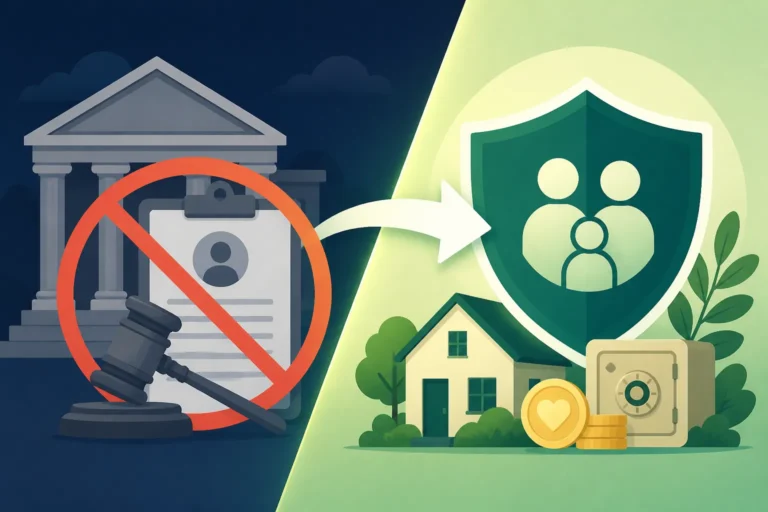
How to Avoid Probate in Pennsylvania
Navigating what happens to your assets after you're gone can feel incredibly overwhelming, especially when you start hearing about terms like "probate." For many Pennsylvanians, the thought of their loved ones getting stuck in a lengthy, costly, and often public legal process is a real source of anxiety. It's a journey through paperwork and court procedures that can truly complicate an already difficult time. This guide is here to shed some light on the probate process in Pennsylvania and, more importantly, to arm you with practical strategies to help your family sidestep it entirely, ensuring your legacy is handled with the ease and privacy you intend.
Understanding Probate in Pennsylvania and Why You Might Want to Sidestep It
Let's be honest, the word "probate" alone can conjure images of dusty courtrooms and endless legal battles. For many, it's a mysterious process that happens behind the scenes after someone passes away. But understanding what it truly entails, particularly in Pennsylvania, is the first step toward effective planning.
What Exactly is the Pennsylvania Probate Process?
At its core, probate in Pennsylvania is the official legal process that proves a will is valid, identifies and inventories the deceased person's property, pays any debts and taxes, and finally, distributes the remaining assets to the rightful heirs or beneficiaries. It's supervised by the Register of Wills in each county, whether you're in a bustling area like Philadelphia County or a more rural setting in Centre County.
The journey typically begins when someone, usually the executor named in a will, files a petition with the Register of Wills to open the estate. If there's no will, a close family member might petition to be appointed as an administrator. Once appointed, this individual (the executor or administrator, collectively known as the personal representative) takes on a significant role. They'll need to gather all of the deceased's assets, get them appraised, pay off any outstanding debts or taxes, and keep meticulous records of every transaction. This often means dealing with banks, financial institutions, and even real estate agents if property needs to be sold.
It's important to understand that probate generally only applies to assets that were solely in the deceased's name and did not have a named beneficiary or co-owner with rights of survivorship. Things like a solely owned bank account, a car titled only in the deceased's name, or real estate without a joint owner would typically go through probate. To truly grasp the nuances, a good starting point is our comprehensive guide on What Is Probate? Complete Guide.
The Hidden Costs and Time Commitment of Pennsylvania Probate
One of the biggest frustrations for families navigating probate is the sheer amount of time and money it can consume. It's not just about the emotional toll; there are very real financial and temporal burdens that can significantly impact the inheritance left behind.
First, let's talk about the costs. These can quickly add up. You're looking at various fees that chip away at the estate's value. There are court filing fees paid to the Register of Wills, which can vary by county and the size of the estate. Then, there are often legal fees for the attorney who guides the personal representative through the process. While not always legally required, having an experienced attorney is highly recommended, especially for larger or more complex estates. Executors are also entitled to a fee for their services, which is typically a percentage of the estate's value. Add in appraisal fees for real estate or valuable collectibles, accounting fees, and the cost of publishing legal notices, and you can see how quickly these expenses accumulate. For a more detailed breakdown, check out How Much Does Probate Cost?.
Beyond the money, there's the time factor. Probate is rarely a quick process. Even a straightforward estate in Pennsylvania can take several months to a year, and more complex cases – perhaps involving disputes among beneficiaries or difficulties valuing assets – can stretch on for two years or even longer. Imagine a family needing access to funds to cover ongoing expenses, only to find them tied up in probate for months on end. This delay can cause significant financial hardship and emotional strain. It’s definitely worth understanding How Long Does Probate Take? if you’re concerned about timelines.
Finally, probate is a public process. Once an estate is opened with the Register of Wills, the details of the will, the inventory of assets, and the final accounting often become public record. For many families, this lack of privacy is another compelling reason to explore probate avoidance strategies.
Essential Strategies to Bypass Probate in the Keystone State
Thankfully, you don't have to simply accept that your assets will go through probate. There are several proactive steps you can take right now to ensure a smoother, more private, and more efficient transfer of your wealth to your loved ones in Pennsylvania.
Leveraging Beneficiary Designations for Seamless Transfers
One of the simplest and most effective ways to bypass probate is by strategically naming beneficiaries on your accounts. Many financial products and accounts allow you to do this, ensuring they pass directly to your chosen individuals without ever touching the probate court.
Think about your retirement accounts like IRAs and 401(k)s, life insurance policies, and annuities. When you set these up, you're asked to name a primary beneficiary and often a contingent (backup) beneficiary. When you pass away, these assets go straight to the named beneficiaries, completely sidestepping the probate process. It’s incredibly important to remember that these beneficiary designations override anything you might have written in your will. So, if your will says your cousin gets your IRA, but the IRA's beneficiary form names your sister, your sister will receive those funds. It's that powerful.
A common mistake people make is forgetting to update these designations after major life events – a marriage, divorce, birth of a child, or even a death in the family. Regularly reviewing these forms is crucial to ensure they align with your current wishes. It's also wise to name contingent beneficiaries in case your primary beneficiary passes away before you do. This prevents the asset from potentially reverting to your estate and thus, into probate. For instance, did you know that Does Life Insurance Count Toward Estate Tax? is a separate consideration from its probate status? While the payout itself generally avoids probate, its value might be included in your taxable estate. For bank accounts, a similar concept applies through what are called Payable on Death (POD) Accounts.
The Simplicity and Pitfalls of Joint Ownership
Another common method to avoid probate, especially for real estate and bank accounts, is holding assets in joint ownership with "rights of survivorship." This means that when one owner passes away, their share of the asset automatically transfers to the surviving owner(s) by operation of law, completely bypassing probate.
In Pennsylvania, married couples often own their primary residence as "Tenancy by the Entirety." This is a special form of joint ownership exclusively for spouses, which includes an automatic right of survivorship. So, if one spouse dies, the other automatically becomes the sole owner of the property. Non-spouses can hold property as "Joint Tenancy with Right of Survivorship" (JTWROS). Bank accounts can also be held jointly with survivorship rights.
While seemingly simple, joint ownership does come with its own set of potential pitfalls. First, when you add someone as a joint owner, you're essentially giving up a degree of control over that asset. The new co-owner has equal access and decision-making power. Second, adding a non-spouse as a joint owner might trigger federal gift tax implications, especially if the value is significant. Third, and perhaps most importantly, jointly owned assets are exposed to the creditors and legal judgments of all owners. If your co-owner faces financial trouble or a lawsuit, your shared asset could be at risk. This is why it’s essential to weigh these factors carefully, especially when considering How to Avoid Probate on a House through joint ownership.
Pennsylvania's TOD and POD Accounts for Non-Probate Transfers
Beyond traditional beneficiary designations, Pennsylvania offers specific account types that facilitate non-probate transfers for certain assets: Payable-on-Death (POD) for bank accounts and Transfer-on-Death (TOD) for investment accounts and even vehicles.
Payable-on-Death (POD) Accounts: With a POD designation, you name beneficiaries for your bank accounts (checking, savings, CDs). You retain full ownership and control over the funds during your lifetime. The named beneficiaries have no access to the money while you're alive. Upon your death, the bank simply transfers the funds directly to the beneficiaries, bypassing probate. It's a straightforward, free, and effective way to ensure liquid assets get to your loved ones quickly.
Transfer-on-Death (TOD) Accounts: Similar to POD, TOD designations work for investment brokerage accounts, stocks, bonds, and even vehicles in Pennsylvania. You name beneficiaries who will receive these assets directly upon your death. Again, you maintain complete control over the investments during your lifetime – you can buy, sell, or change beneficiaries as you wish. Only at your passing does the transfer occur without probate. This is particularly useful for portfolios that might otherwise be tied up in court.
Pennsylvania also offers Transfer on Death Deed Explained for real estate. This is a game-changer for many homeowners. By executing and recording a TOD deed, you can name a beneficiary (or multiple beneficiaries) to receive your property directly upon your death. Unlike joint ownership, you retain sole ownership and control of the property during your lifetime – you can sell it, mortgage it, or revoke the TOD deed at any time. This offers the best of both worlds: probate avoidance for your most significant asset without sacrificing control.
Utilizing Trusts and Other Advanced Tools in Pennsylvania Estate Planning
While beneficiary designations and joint ownership are excellent starting points, for many Pennsylvanians, a more comprehensive approach is needed to truly streamline the estate settlement process. This often involves the use of trusts, which can offer greater control, privacy, and flexibility.
The Versatility of a Revocable Living Trust in Pennsylvania
A revocable living trust is arguably the most powerful tool for avoiding probate. Think of it as a separate legal entity that you create to hold your assets. During your lifetime, you typically play multiple roles: you are the "grantor" (the person who creates and funds the trust), the "trustee" (the person who manages the assets within the trust), and the "beneficiary" (the person who benefits from the assets).
The magic happens because assets transferred into the trust are legally owned by the trust, not by you personally. This means that when you pass away, those assets are not part of your probate estate. Instead, your "successor trustee" (the person you've designated to take over) steps in, follows the instructions you've laid out in the trust document, and distributes the assets to your chosen beneficiaries. This entire process occurs privately and efficiently, completely outside the probate court system. This is a key reason many people choose to explore Do I Need a Trust?.
Beyond probate avoidance, a revocable living trust offers several other compelling benefits. It provides privacy, as the details of the trust and its assets are not public record. It offers remarkable control, allowing you to specify exactly how and when your assets are distributed – perhaps over time, or contingent on certain milestones, rather than in a lump sum. Crucially, it can also provide seamless management of your assets if you become incapacitated during your lifetime, as your successor trustee can step in without court intervention.
The most critical step in making a revocable living trust effective is "funding" it, which means formally transferring ownership of your assets (like real estate, bank accounts, investment portfolios) from your name into the name of your trust. Many online services, such as LegalZoom, offer templates and guidance for drafting a revocable living trust, which can be a good starting point for simpler estates. However, it's always advisable to have a Pennsylvania estate planning attorney review any such document to ensure it complies with state law and fully meets your specific needs. Understanding the ins and outs is vital, and our detailed explanation of a Revocable Living Trust Explained can offer more insights.
Considering Irrevocable Trusts for Specific Goals
While revocable trusts offer flexibility, irrevocable trusts are another type of trust that, once created and funded, generally cannot be changed or revoked without the consent of the named beneficiaries. This loss of control means they're not for everyone, but they can be incredibly powerful tools for specific, more advanced estate planning goals.
Like revocable trusts, assets held in an irrevocable trust avoid probate because they are no longer considered part of your personal estate. However, irrevocable trusts go a step further. Because you've given up control and ownership, these assets are often removed from your taxable estate. This can be a significant benefit for individuals with very large estates who are concerned about federal estate taxes (though Pennsylvania doesn't have an estate tax for most residents, the federal one is still a consideration). If your goal is to minimize federal estate tax liability, understanding How to Avoid Estate Tax With Trusts is crucial.
Irrevocable trusts can also offer enhanced asset protection from creditors and lawsuits, and they are frequently used in Medicaid planning to help individuals qualify for long-term care benefits while protecting family assets. Due to their complexity and the permanent nature of the asset transfer, irrevocable trusts are typically recommended for higher net worth individuals or those with specific long-term care or asset protection concerns. They absolutely require the guidance of an experienced estate planning attorney.
Practical Estate Planning Documents for Pennsylvania Residents
While avoiding probate is a key goal for many, a comprehensive estate plan extends beyond just trusts. Even if you're aiming for full probate avoidance, certain foundational documents remain absolutely critical for every Pennsylvanian.
First and foremost is a well-drafted will. While a will itself does not avoid probate, it serves as a crucial safety net for any assets that might inadvertently be left out of your trust or beneficiary designations. More importantly, your will is the place where you name guardians for your minor children, which is a responsibility that cannot be assigned through a trust. It also allows you to specify who will be your executor, giving clear instructions for the administration of your estate. Think of it as a comprehensive instruction manual for everything not covered by your other probate avoidance strategies.
Beyond a will, you absolutely need documents that address potential incapacity during your lifetime. A Durable Power of Attorney designates someone to make financial and legal decisions on your behalf if you become unable to do so. Without this, your family might have to go to court to get guardianship, which is its own lengthy and costly process. Similarly, an Advance Healthcare Directive (often called a Living Will or Medical Power of Attorney in Pennsylvania) allows you to appoint someone to make medical decisions for you and provides instructions regarding your end-of-life care preferences.
An effective estate plan is a cohesive package, where all these documents work together seamlessly. Even if you use an online service like LegalZoom to create basic versions of these documents, it's highly recommended to have them reviewed by a local Pennsylvania attorney to ensure they comply with state-specific laws and genuinely reflect your wishes. It's about having a complete blueprint, not just a few disconnected parts. For a helpful overview of all the pieces, explore our Estate Planning Checklist. The question of Will vs Trust: Which Do You Need? is often at the forefront of people's minds, and the answer is often "both."
Tailoring Your Probate Avoidance Plan with Professional Guidance in Pennsylvania
Crafting an effective probate avoidance strategy, especially one that stands up to Pennsylvania's specific legal framework, can feel like a daunting task. While self-help resources are valuable, there's no substitute for personalized professional advice.
When to Engage a Pennsylvania Estate Planning Attorney
The internet is full of information, and many people start their estate planning journey with online searches. However, when it comes to the intricate details of property transfer, tax implications, and family dynamics, a qualified Pennsylvania estate planning attorney is an invaluable asset.
You should seriously consider engaging an attorney if you have:
- Complex Family Situations: Blended families, estranged relatives, or concerns about a beneficiary with special needs (where a special needs trust would be vital) require careful legal structuring.
- Significant Assets or High Net Worth: While Pennsylvania doesn't have an estate tax, the federal estate tax exemption is substantial, but changes can occur. For large estates, an attorney can help with advanced strategies like irrevocable trusts to minimize potential federal tax liability.
- Business Ownership: If you own a business, proper succession planning is crucial and often involves complex legal structures that an attorney can expertly navigate.
- Specific Distribution Desires: If you want assets distributed over time, or contingent on certain events (like reaching a certain age), an attorney can draft trust provisions to ensure your wishes are legally enforceable.
- Concerns about Creditor Protection: An attorney can advise on strategies to protect assets from future creditors or lawsuits.
An experienced estate planning attorney in Pennsylvania, perhaps one specializing in your local county like Montgomery County or Dauphin County, will not only ensure all your documents are legally compliant but also integrate them into a cohesive plan that truly serves your unique circumstances and goals. They can provide peace of mind that your plan will work as intended when it matters most.
The Role of Financial Advisors and Online Estate Planning Services
While estate attorneys focus on the legal framework, other professionals and tools can also play a vital role in your overall probate avoidance strategy.
Financial Advisors: Your financial advisor often acts as a quarterback, helping you align your asset titling, beneficiary designations, and investment strategies with your overall estate plan. They can help you identify which assets are probate-able and work with your attorney to ensure that investment accounts are properly structured to avoid probate. They're excellent at making sure all the financial pieces of your puzzle fit together.
Online Estate Planning Services: For individuals with simpler estates and straightforward wishes, online platforms like LegalZoom can be a cost-effective way to draft basic estate planning documents, such as a will or a simple revocable living trust. They offer user-friendly interfaces and guided processes that can help you create foundational documents from the comfort of your home. They can be a great starting point, allowing you to get some essential paperwork in order without the immediate expense of an attorney. Many individuals find that the investment to simply begin their Best Online Will and Trust Services 2027 search, often leads them to a good starting point for their planning process.
However, it's crucial to understand their limitations. These services provide document preparation, not legal advice tailored to your specific situation. They can't interpret complex family dynamics, offer tax guidance, or anticipate all the nuances of Pennsylvania law that an experienced attorney would. They may not catch potential pitfalls, such as those related to specific state estate tax rules like the infamous New York Estate Tax Cliff Explained, if you have ties to other jurisdictions. For instance, while they can help you draft a trust, they won't typically assist with the critical step of funding the trust (transferring your assets into it). This is why, even if you start with an online service, it's highly recommended to have a Pennsylvania estate planning attorney review your completed documents to ensure they are legally sound, correctly executed, and truly meet your objectives. Comparing options and costs, such as understanding How Much Does a Living Trust Cost? when prepared by an attorney versus an online service, can help you make an informed decision.
Ultimately, a proactive approach to estate planning, whether it starts with a few simple beneficiary updates or a full suite of trusts and legal documents, is an act of kindness to your loved ones. It ensures that when the time comes, they can focus on grieving and remembering you, rather than grappling with court procedures and financial uncertainty.
| Method | Description | Pros | Cons |
|---|---|---|---|
| Beneficiary Designations | Directly name individuals on accounts (IRAs, life insurance, 401(k)s) | Simple, effective, direct transfer, avoids probate, easy to update | Easy to forget to update, overrides will, no control after death |
| Joint Ownership | Owning assets (real estate, bank accounts) with right of survivorship | Automatic transfer, avoids probate, simple for married couples | Loss of control, creditor exposure, potential gift tax, unequal distribution |
| TOD/POD Accounts | Designate beneficiaries for bank/investment/vehicle accounts | Retain control during life, avoids probate, simple to set up | Limited to specific asset types, no provisions for incapacity |
| Revocable Living Trust | Assets held by a trust, managed by a trustee for beneficiaries | Avoids probate, privacy, control over distributions, manages incapacity | Requires funding, initial setup cost, more complex than a will |
| Irrevocable Trust | Trust that cannot be easily changed or revoked once established | Probate avoidance, asset protection, potential estate tax reduction | Loss of control over assets, complex, higher setup costs, less flexible |
Disclaimer
This article is for general informational purposes only and does not constitute professional advice. Laws and regulations vary by location and change over time. Consult a qualified professional for guidance on your specific situation.